Mostrando entradas con la etiqueta Denmark. Mostrar todas las entradas

miércoles, 15 de marzo de 2017

2016 Migratory Report by Matias Cavoti: Part 6 Border Walls and Fences


Conclusion:
Resultado de imagen para border fence europe
18 years ago when I started to study international relations, you couldn't stop reading about globalization, international comers and integration would progressively erode the necessity of borders, people and goods should and must move freely. What a stark contrast with the world we have today that has governments of many State fixated on building fences, walls and barricades, around 70 countries around the world have built some kind of physical barriers to stop the movement of migrants or refugees, be it from their neighbors or for people from third countries. In the past three years, there has been an explosion of announcements and construction of border barriers and the temporary  reintroduction of border controls in the Schengen area which I have summarized in this reference chart.

Country
Barrier/Fence/Wall and Reintroduction of Border Control in Schengen Area.
Reasons
Algeria
Announced the creation of a barrier on its border with Libya and Morocco in 2015.
Immigration, Trafficking and Security.
Austria
Announced the creation of a barrier on its border with Slovenia 2015 and Italy 2016. Temporarily lifted Schengen and reestablished passport border control during 2016 and during early 2017.
Immigration.
Bulgaria
Completed its barrier with Turkey in 2015. And has it military patrolling its Sothern border.  
Immigration.
Demark
Temporarily lifted Schengen and reestablished passport border control during 2016 and during early 2017.
Immigration
Estonia
Announced the creation of a barrier on its border with Russia in 2015.
Security and Territory.
France
Reintroduction temporarily of border control in Schengen area from 13/11/15 to 26/01/17.
Security.
Great Britain
Complete a border fence in Calais and Coquille France in 2015.
Immigration.
Germany
Temporarily lifted Schengen and reestablished passport border control during 2016 and during early 2017.
Immigration
Hungry
Completed a border fence Serbia, begun a barrier with Croatia and announced with Romania all in 2015.  Country plans for a second fence for 2017 to have high-tech aspects like electro shocks, load speakers, cameras and heat sensors.
Immigration.

India
Announced the creation of a barrier on its border with Bhutan 2015.
Security. One must note that this country is already completely fenced off Bangladesh and Pakistan.
Iran
Complete barrier with Iraq in 2015 and previously announced creating a fence on its border with Turkey in 2015.
Immigration and Security.
Israel
Completed a barrier with Egypt in 2013, begun another the same year with Syria and announced another with Jordan in 2015
Immigration and Security.
Kenya
Announced the creation of a barrier on its border with Somalia in 2015
Terrorism and Immigration. One must note that this border is completely militarized.
Latvia
Announced the creation of a barrier on its border with Russia in 2015.
Security and Territory.
Lithuania
Announced the creation of a barrier on its border with Russian exclave Kaliningrad in 2015
Security and Territory.
Malaysia
Announced the creation of a barrier on its border with Brunei, Indonesia and Thailand in 2015.
Trafficking and Smuggling.
Mexico
Announced the creation of a barrier on its border with Guatemala in 2015.
Other.
Morocco
Announced the creation of a new barrier on its border with Algeria in 2015.
Territorial disputes, since 1994 the border between the two countries has been closed.
Myanmar
Has begun building a barrier with Bangladesh in 2015.
Trafficking, Smuggling and Immigration.
Namibia
Announced the creation of a barrier with Angola in 2015.
Other.
Norway
Announced the creation of a border fence on its border with Russia in 2016. Temporarily lifted Schengen and reestablished passport border control with Denmark during 2016 and during early 2017.
Immigration
     Oman
Begun building a barrier with Yemen in 2014
Security.
Saudi Arabia
Completed a barrier on the Syrian border in 2014 and announced another the same year on the border with Qatar.
Immigration, Security and Smuggling.
Slovenia
Started building a barrier on its border with Croatia in 2015. The military controls the border and enforces migratory control.
Immigration.
Sweden
Completed barrier in 2015 and Temporarily lifted Schengen and reestablished passport border control with Denmark during 2016 and during early 2017.
Immigration.
Turkey
Begun a barrier with Syria in 2015.
Immigration and Security.
Ukraine
Announced the creation of a new barrier on its border with Russia.
Territorial.
Tunisia
Has begun building a barrier Libya in 2015.
Immigration and Security.
The United State of America.
Announced in 2016 the establishment of a new and more complete wall.
Security, Smuggling, Illegal migrants, and terrorism.

Building border fences or walls should be the last option on the table, but States are using it as their first choice. Literally the concept of border/separation and us/them logic is back with a vengeance and here to stay, especial in Europe and the United States. The stigmatization of the concept of border barrier that had that taken hold after the fall of the Berlin wall, has writhed away. Ever since 9-11 and the war on terror, finding fertile ground in societies that have lost sensitivity towards needs of migrants or are feeling the burden of over saturation or just will not tolerate migrants, in general, entering their territories.   
But with all of this talk of walls and barriers, people tend to forget, paraphrasing border expert Marcello Di Cintio:  History has already shown us how one of the most heavily fortified borders in history with trigger happy guards, the Berlin Wall, could not stop thousand of East Germans from crossing (Di Cintio/DailyMail 2016). I find that the lack of historical perspective not only in migratory issues troubling, this inclination towards right winged nationalistic policies that push this agenda of securitization of migratory movements and border fences, as quick and magical fixes. But these people are completing ignoring that  border barriers conceived like they have imagined tend to be a burden more than a blessing and have questionable effectively. But these political promises of security and safety from those politicians gain a quick political capital in the short term until public spend becomes an issue.    
The walls and fences tend to divides communities and generates a strong a negative  psychological effect feeding into tensions, distrust and even a slow build animosity. For example working in a border town[1] locals from both sides could cross with minimum control with special IDs because they lived there lives on both sides. Now when it was established that they had to do the same ID controls as everyone else crossing having to wait in line things heated up very quickly, so imagine what a wall can do. Reece Jones, another known authority in border barriers, explains these obstacles always tend to affect the poorest and the most desperate affected, while drug cartels and terrorist group have resources to enter by safer methods, for example, getting their hands on more favorable fake travel documents (Jones/Daily Mail 2016). One must not forget that the Hamburg Cell led by Mohamed Atta that made the attack on the World Trade Center all entered the United State with legal visas, not hopping the border. Another example of how ineffective any kind of physical wall can be against the modern terrorism States face in the present day group like ISIS do not even need to move operatives they can just use the internet to inspire lone wolf attacks in their name, no border need to be cross. Now in my point view drug trafficking can be hindered up to a certain point, but as long as there is demand for those products trafficker will find a way to cross their goods.  
These border barriers affect migratory movement in two ways, funneling migrants to other areas where they can possibly cross or put themselves in danger, like as mention in the chapter about United State and its segmented enforcement the provoking that migrants used services of traffickers to cross the dessert or provoking a build of migrants at the border escalating the tension between State especially when these people are from third State.
In my personal opinion barriers can be very effective but must be defined differently and be only part of a complete migratory policy, not a quick fix and center of a States action because the problem will not go away because of the push and pull factors on the migrants are still at work. If thing are done right, a wall can be used a lesser evil, and instead of funneling people to other areas it should funnel them to places where people can get the proper control. If you have ordinary people, not hardened criminal trying to enter illegally to establish themselves, means that your migratory policy has failed, especially if the barrier the was conceived for dissuasion.
An effective migratory policy and a proper control is a product of exhaustive cooperation on both sides, building ties and sharing information. There is a need to create   clear and unequivocal rules for migrants to obtain legal residencies, no double standards referring to irregular migrants, if you do not want a large amount of undocumented competing unfairly in the domestic labor market generating a possible future social conflict. Border security is fundamental, but addressing the push factors in the countries where migrants come from, sometimes directly investing in these place to generate work is much cheaper than maintaining a small army to watch over a wall, for political this can be a hard sell to their constituency but it is the most cost effective.          


[1] which I can't mention

martes, 1 de marzo de 2016

Book Review and Analysis The Origin of the Names of the Countries of the World (and the many islands that they have)


Title: The Origin of the Names of the Countries of the World (and the many islan that they have)/ El Origen de los Nombres de los Paises del Mundo (y de muchas de la Islas que estos poseen). (2004)

Author: Edgardo Otero

Today I'm going to review and analyze this beautiful history book written by Edgardo Otero, who isn't a professional historian, but a part time journalist and a full on history nerd. The author divides this book in large geographical chapters, and  the first one is about America which he divides in 4  subchapters :  North, South, Central and the Caribbean, then after this he works on the countries that are in Africa, Asia, Europe, Oceania and  the territories of Antarctica. In each chapter the author explains  the origins of each country in alphabetical order and where did they get their names, and most of the time it's a fascinating read.

So after reading this book  I thought to myself, I should  to do something different  for this post. so working on this text  and   out of curiosity I wanted to  see  statistically, using the information from this book,  lets  try  find out which reason that inspired a countries name prevails over the rest, just  for the fun of it and lets see where the information takes us, so today we are going to check this out with the States that are found in South America. 


Inspiration for the names of South American States and Territories
Examples
Rivers or other bodies of water 5 Paraguay, Peru, Uruguay…
Historical figures or People that discovered the place 5 Simon Bolivar for Bolivia , Columbus for Colombia
Tree or other plants 1
Inspired by Mountains, Vallies or other geographical characteristic 2
Because of mineral resources 
Name that describe social or political organization 1
Animals and wildlife 1
In Honor of Religious figures 
Indigenous group/tribes 2
Name references another place 1


Some fun country facts from South America that I've discovered in this book:
·         Venezuela actual means little Venice, as in Venice Italy, this historic city served as inspiration for the name of this country.
·         Bolivia that was named in honor of Simon Bolivar, who actually only visited the country once asked the authorities not to name the country after him.
·         Suriname was traded by the British to the Dutch, for a territory occupied the Dutch called New Amsterdam the latter would be renamed New York.


If you like the review give me a hand and support me on Patreon at this Link that will make me, Matias Cavoti very happy to keep writing.


Today I Bring you guys the stats on the countries names from Central America, North America and the Caribbean + Territories and Islands.


Inspiration for the names of States in Central America, North America and the Caribbean + Territories and Islands
Examples
Rivers or other bodies of water 3
Historical figures or People that discovered the place 12 Columbus named a lot of Island after people he knew or wanted to impress
Trees or other plants 4
Inspired by Mountains, Vallies or other geographical characteristic 12
Because of mineral resources  5
Name that describe social or political organization 5
Animals and wildlife 4
In Honor of Religious figures  1
Indigenous group/tribes
Name references another place 5
Inspired out of historical events  or other cultural traditions 2 Note this category is new


Some fun country facts from these regions:


Some curious information:

·         Since Columbus was running out of names for territories was discovering he actually named Dominica ( that latter it would become the Commonwealth of Dominica), after a day of the week Sunday, which is Domingo  the day he discovered this territory. Also Columbus named many Island after people the he knew or wanted to impress.
·         The Crimean war that transpired 1853 to 1856, lead Russia who needed cash urgently to sell Alaska to the United State of America for 7.2 million dollars.
·         Yankee is a deformation of the Dutch word Jaankee that means little john, the way the Dutch referred to the English.  
·         To my surprise Denmark's official claim over Greenland is pretty recent, 1921 and in 1933 it was officially recognized international as a part of Demark, but became a autonomous territory in 1979.


Some Interesting Conclusions one can draw from this part of the book:
·         The book truly illustrates how relevant Christopher Columbus was, this guy like it not triggered a historical revolution that had a global impact. Modern historians tend to reduce his historical importance, but when you read this book you rediscover the true scope of his travels and its reduced time frame, he did  a lot in a short time.


If you like the review give me a hand and support me on Patreon at this Link that will make me, Matias Cavoti very happy to keep writing.


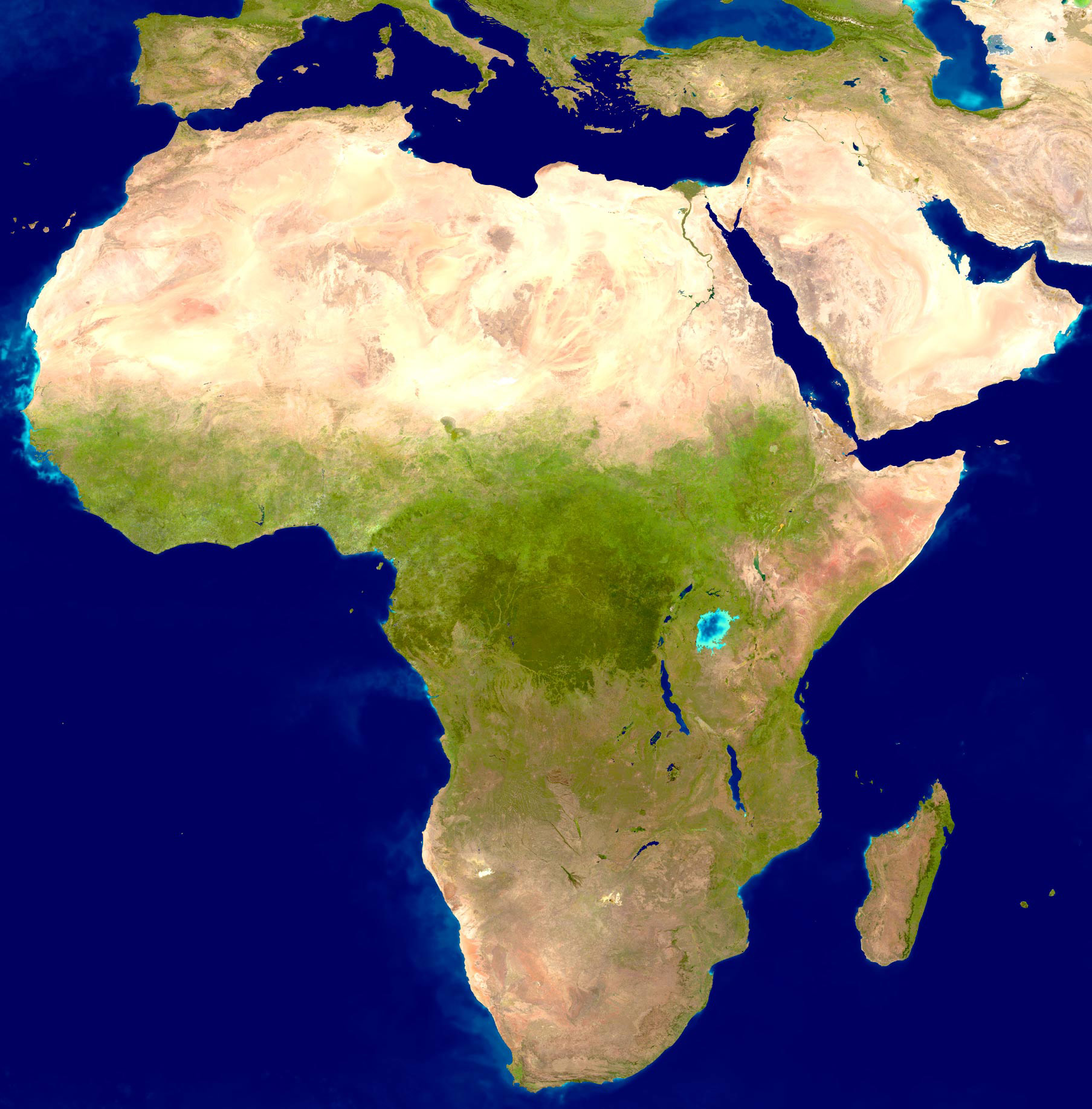
Today I Bring you guys the stats on the countries names and Island of the great continent Africa:


Africa and its surrounding Islands
Examples
Rivers or other bodies of water 7
Historical figures or People that discovered the place 9
Trees or other plants 4
Inspired by Mountains, Vallies or other geographical characteristic 12
Because of mineral resources 
Name that describe social or political organization 5
Animals and wildlife 4
In Honor of Religious figures 
Indigenous group/tribes 9
Name references another place 3
Inspired out of historical events, religion and other cultural traditions 10
Reference to a location 3
Description of its population 4 Ethiopia
Name references comers or trade 2
Denomination inspired  from the sun, the moon or other astronomical objects 2 Comoras/Comoros
Name references langue  1
No one knows the origin of its name 1
Tunez/Tunes


Some curious information and Interesting Fact presented in this book:


Add caption
·         The book presents many origins to the content of  Africa name, I'm going to focus on only two that I found most interesting: The first one we find that most historians affirm that  name Africa derives from Ifriq or Afer, who is known as Epher in the bible son of Abrahams third wife Quatura, that established himself on this content. In the second explains   that the origin of the word comes from Ifrigo bin Abraha Al-Raish the man that built the city called Ifriqiyyah, that over time became Africa.
·         Cueta is a spanish enclave in Morocco, that in arab tradition is one of the  first cities built after Noah's universal flood, and the  first settlers in Africa came from this city being originally called Septa, because it was founded by Noah's Septh and that over the year the name deformed into Cueta. Others establish  Ceib Noah's grandson truly founded this city and the name derives from him.
·         Camerun receives it name from shrimps, yes shrimps, you see when the Portuguese explorer Fernando Po traveled through the river Wouri  he called it  "Rio dos Camaroes" which translates "river of shrimps", because the amount of these little animal that he found in it, the name stuck.
·         Liberia was actually created by a initiative born in the  United States of America authorized by it congress, to reestablish freed African slaves, and its first president Joseph J Roberts was actual born in Virginia.
·         It seems that Marco Polo arrived to the coast of Madagascar in 1298, and he ask the locals the name of the place that he had made land fall and they responded Madagascar,  mistakenly or out of a misunderstanding  with the European explorer,  because actually that is the name for the African mainland for these people, and the island is actually called Izao Will Rehetra Izao. Another story with Marco Polo establishes that he thought that he had arrived to the Somalia's capital Mogadishu and he deformed it into Madagascar.
·         Namibia name one of the meaning actually is  "place with no being/people".


If you like the review give me a hand and support me on Patreon at this Link that will make me, Matias Cavoti very happy to keep writing.


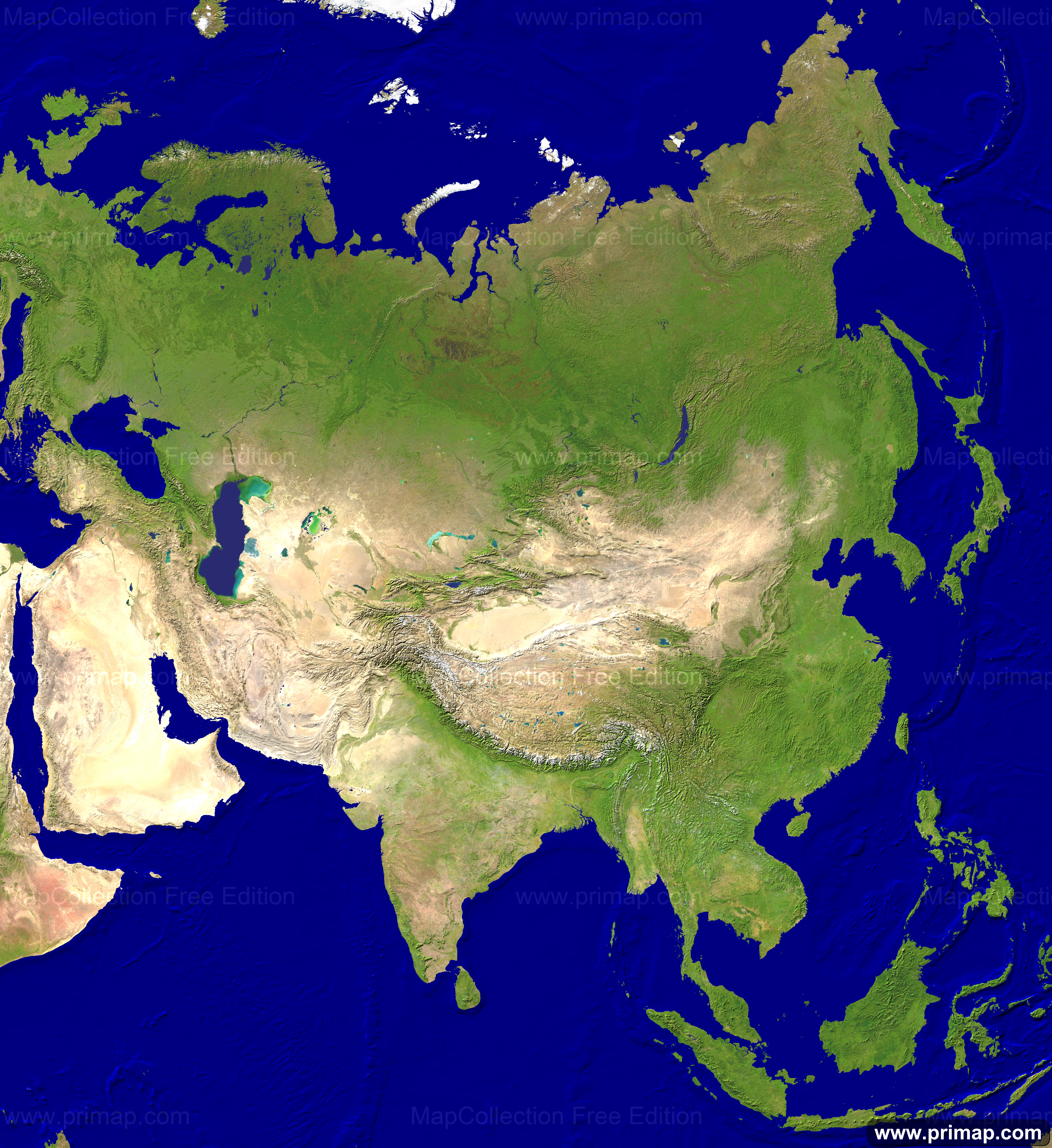
So Finally after a long time I update my post with


the geographic juggernaut of Asia


Asia and its surrounding Islands

Rivers or other bodies of water 4
Historical figures or People that discovered the place 2 Philipines 
Trees or other plants  
Inspired by Mountains, Vallies or other geographical characteristic 21 Nepal
Because of mineral resources  2
Name that describe social or political organization 2
Animals and wildlife 1
In Honor of Religious figures   
Indigenous group/tribes 1
Name references another place 3
Inspired out of historical events, religion and other cultural traditions 15
Reference to a location 6 China
Description of its population 7 Mongolia
Name references comers or trade 1
Denomination inspired  from the sun, the moon or other astronomical objects 1 Japan
Name references langue   
No one knows the origin of its name, or a very curius origin 2 Singapure
Reference to a Structure or a type of building 1 Gaza


Some interesting facts about some Asian countries and territories that maybe you didn't know:
Add caption


·         Armenia is a country that has a long relationship with Christianity and the Bible in general, in the year 301 was the first "nation" to convert to Christianity, becoming the official religion of the State", now the book establishes that in Armenian tradition Haig/Haik their first king  was the great grandson of Noah who built his arc on mount Ararat , and some traditions sustain that the arc still on the mountain  up until this day.
·         It's believed the  name of Gaza was given to the territory by the Canaanites about 3000 B.C.  and it possibly mean fortress.
·         The territory of Hong Kong, has very different country meaning compared to most other countries or territories, it originally was called Xiang-Gang that means "perfumed waters".
·         The name of Persia the original name of Iran, derived from the name of the Mythological Hero Perseus.
·           The treaty of Sevres in 1920, recognized the Kurdish State, but the auto determination of the Kurdish people was ignored in the  Lausanne treaty in 1923 that  is the foundation for the birth of the modern Turkish State, basically they got screwed.
·         Both Mongolia and China mean or reference that there country is at the center of the world.