Mostrando entradas con la etiqueta United States of America. Mostrar todas las entradas

jueves, 27 de junio de 2019

Book Review of Samuel P. Huntington's Who are We? The Challenges to America's National Identity

Who are We? The Challenges to America's National Identity (2004)


By:  Samuel P. Huntington

Why I got the Book: Basically I enjoyed his classic book Clash of Civilizations even though that book does have some major  issues and certain parts have not aged well, So I came across this very interesting book by Huntington a couple of years ago on US migratory policy that I just had to get, because it is in a field I specialize in immigration.
What I liked :
•    Huntington explores how American constructs  its identity and how it has evolved from its early colonial days up until the early 2000s.
•    The author dives deep into the fact that Americans historically are traditionally religious, something that most none American find surprising.
•    The book takes great effort in trying to explain how the idea that the United States is a country that was and is a  country of immigrants at it had its doors open to them, is a relatively modern concept.
Central Thymes:
•    Is the influx of Spanish speaking migrants, subvert or modify United States national identity and will it become a bilingual and bicultural country?
•    Identity is the feeling of self of an individual within a Grupo. A product of the self-conscious of itself and poses qualities that differentiates itself from others.
•    One Individual may have more than one identity depending on how many group or ciphers they are a part of,  these can adscriptive ( age, sex, ethnic, race...), territorial, economic, cultural, political, social and national. But the identity itself is an imaginary personality, of what we think we are and what we want to be. Identity is also defined by the interaction with other.
•    Individuals need the other, but do they need an enemy? The creation of the enemy actually helps and consoles individuals, it brings cohesion to the group and comparison of what one is not is gratifying, help create differentiation. With groups, the enemy reinforces all of its qualities. The need for self-esteem leads to groups feeling that they are better than the rest, and the group's ego pushes the notion that they are better than the rest.
•    The book gets into the idea that the United States is a nation of immigrants is a pretty modern concept.  The Country was not founded by immigrants but by colonist leaving their land of origin to create something new collectively. There is a strong sense of community and there is an explicit or implicit pact among its members. Immigrants do not create a new society, they move from one to another.
•    In the case of the original colonist of the United States, they were not representative of their population of their country of origin, they were from parts that had been marginalized.
•    66 million migrants arrived to the United States from 1820 to 2000, but the principle make up the US population was descendants of the colonist, immigrants, slaves, native Americans and other conquered groups like Puerto Ricans, Hawaiians and descendants of Mexicans from Texas.
•    The American creed is a principal part of their civic identity and the idea of the exceptionality of their country, American think that their core values are universal.  Another aspect of its identity like it anglo, protestant and racial nature, comes a goes if taken into account for identity, but  territory has never played as a major factor.
•     Race used to be a bigger factor in US identity, in 1790 for citizenship was only for free white people, even though 20% population of Black. With this logic, the United State did not make Philipines or Puerto Rico into States. In 1875 prohibited the immigration of prostitutes and delinquents. In 1882 the prohibition of Chinese immigrants became law, Irish and Polish immigration were looked down on. The idea of a multiracial and Ethnic America is a modern concept born during and after the second world war. 
•    For a large portion of US history Catholics were considered the other,   this a big part of their British heritage that had a strong anti-catholic policy.  In the colonies, Catholics were viewed as possible traitors when Britain had gone to war against Spain and France. The colonial British authority allowed Jewish people to become citizens but not Catholics, execute in Maryland and later in Quebec. Around 1815 with a large influx of migrants from Irland and Germany that were Catholic attitude towards them slowly started to change but also got worse in certain sectors provoking a political backlash they were considered a danger to democracy, because they considered their church autocratic and authoritarian, therefore their followers are the same.
•    The US has a civil religion a profound love for institutions and for patriotism, Americans think they are a chosen people that are exceptional, the new Israel. Many public ceremonies have religious influences and iconography, even certain none religious holidays have a strong religious undertone like memorial day or Thanks Giving.
•    Subnational identities can be based on race, ethnicity, culture, gender, religion...
•    Multiculturalism went up against the concept of the melting pot and assimilation, diversity is more important than the unity of the community, this produced the deconstruction of the American identity.
•    The author cites George Stewart that instead of using the term melting pot the concept of transmutation pot.
•    The lack of an other /enemy up until 2001, the growth in the number of democracies up until that moment across the world, the denationalization of elites y the growth of migrant diasporas of lead to blurring the frontier between national identities and transnational identities.
•    The practical disappearance of ethnicity as a basis for national identity, slow dilution of racial differences and lesser importance of racial identities, the growth of Hispanic culture and the amount of bilingual and bicultural people and less importance of national identity for the countries elites.

What I didn't like or Debatable Stuff:    
•    The greatest threat to modern countries social cohesion is immigration, and basically States have three options: first try to reduce it to zero or near zero, have immigration without assimilation or have immigration with assimilation, at least for me this is a terrible oversimplification of the phenomena of immigration.
•    The author establishes that true assimilation for migrant happens in the second and third generation, but this varies a lot from one immigrant group to another and sometimes second and third generation migrants push back from this assimilation.
•    Book has a lot of filler.
Overall:

lunes, 1 de octubre de 2018

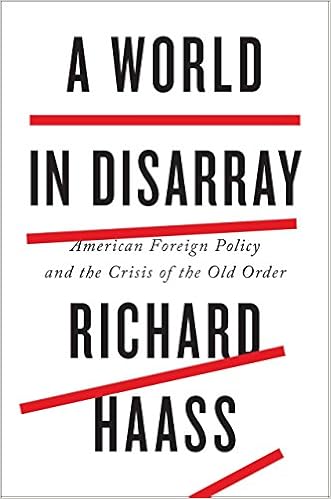
Book Review of Richard Haass's: A World in Disarray: American Foreign Policy and the Crisis of the Old Order (2017) (work in progress)


Resultado de imagen para A World in Disarray: American Foreign Policy and the Crisis of the Old OrderBy:  Richard Haass

Why I got the Book: Richard Haass is a pretty important author in the world of international relations, and I remember reading a couple of books of his back when I was studying, especially   The Reluctant Sheriff: The United State After the Cold War. So basically when I found out he was coming out with a new book in late 2017 I was interested in reading.
What I liked :
•    The book has a very well written introduction, Haass explains exactly what he wants to achieve with the book and basically how.
•    The author takes time to explain the title of the book, so we understand also what is the objective of the book and how he's defining the international system, which is not in a situation of anarchy and it is not a new order either, it is the old order that is in trouble.
•    Haass does a good job defining fundamental terms like World Order at the beginning of the book, I as a reader one appreciates this because you understand exactly what the author is talking about.
•    The book can be divided into three big parts, one focused on the history of the international relation of the twentieth century, the second part centers on the state of international relations during the twenty-first century and finally Haass's recommendations on what the United State should do referring to foreign policy from here on out.
Resultado de imagen para Richard Haass•    Book explains the evolution of the international system during the twentieth century especially analyzing WWII, the post-WWII order, the Cold War and the fall of communism, focusing not only of US foreign policy but also the birth of a constellation of International Organization, NGOs and bilateral and multilateral treaties. 
•    The book has at least two filler chapters and the end where the author gets into his recommendations for future US international policy.
•    Haass is pretty critical of Barack Obama the way he telegraphed his intention with withdrawing troops from Irak and Afganistan or with Iran with the nuclear deal. Also criticizing the comment of the red line with Siria, US involvement in Libya and being very inconsistent with the Arab spring affecting the United States credibility across the world. Richard does mention the succes of killing Osama Bin Ladden is one of the few things that the Obama administration did very well.
•    Haass also complains that the George W Bush and Obama administrations had a very informal way of operating that had a negative impact on making mistakes in foreign policy.
Central Thymes:
•    We are living a grand backlash against globalization, international trade, US involvement around the world and the maintenance of alliances. But this is not only in the United States there is a rise of Populism and Nationalism across the world.
•    The United State is still the most powerful State, but it must share more and more power, because of its ever-changing nature of power, but it is losing influence because of a lack of a proper foreign policy.
•    Power is more distributed, and Richard does not talk about World Order but World Orders. Haass define world order as the nature of the international relations it a measure of the world condition that includes the arrangments the promote peace, prosperity and freedom and those actions that promote the contrary. For there to be order the must be legitimacy, an agreement of the parties of the nature of the relations amongst States (and other actors) the can create a workable situation to operate, we still live in a post westfelian world order. The rules must be defined and no order is safe without physical safeguards. Also for Haass Order depends on the balance of power in the international system and respect for sovereignty.
•    This disorder is a product of structural changes in the international system power  has become more diffuse and there is an ever grown presence of new actors
•    People live longer and better lives, they are more people living in the middle class than any other moment in history.
•    A central aspect of the traditional world order is States and their governments are free to act as they wish within their respective borders.
•    The progressive decolonization during the twentieth century created high levels of disorder in the system on a large scale, the emergence of self-determination that was respected ora least tolerated by many States lead to many countries independence that were not ready for. Also after the end of the cold war and the fall of the USSR 15 new countries appeared on the world stage. Also during this time, we had the emergence of failed States like  Somalia and Haiti, and colossal humanitarian disasters like Ruanda.
•    Post cold war order was incomplete and fragile and international organizations were not up to the task into ushering in a new more solid international order. The Unipolarity the US found itself in a progressively eroding consensus and decreasing legitimacy as time past. The United State being viewed as a superpower is a mistake.
•    The idea of Soverine responsibility becoming more and more important to the modern international system. Issues like Terrorism, Refugees, climate change, cyber crimes/ terrorism, pandemics... all international phenomena that can only be addressed by states working together, unilateral action literal go nowhere and is a waste of time and many find their origin within States and transcend them as they grow, putting in debate the concept of State Sovereignty.  States and their government must understand the ever-growing responsibilities that their internal policies may impact on an international level, Haass explain once State assume this  we will have an evolution of the current international order  
What I didn't like or Debatable Stuff:
Overall: 8 out of 10 good for newbies in international relations.    

martes, 19 de junio de 2018

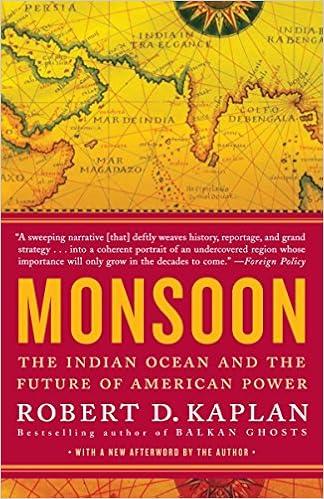
Review and Analysis Monsoon: The Indian Ocean and the Future of American Power


Monsoon: The Indian Ocean and the Future of American Power

By:  Robert D Kaplan

Published in 2010

Resultado de imagen para monsoon the future of the indian
Why I Got This Book:
I actually got this book by mistake, I really wanted to acquire another one of Kaplan's books called the Asian Caldron, which I saw a review for in one of the Caspian's Reports youtube channel. The question is that I also enjoyed this publication a lot because it is also about geopolitics but instead of focusing on the south china sea, it centers on the Indian Ocean.

Central Thymes:
•    One of the main themes of the book proposed by the author it how the Indian Ocean has been historically interconnected thanks to the predictability of the Monsoon winds.
•    Many of the Muslim country to the East of the Indian Ocean are more moderate or more tolerant to other faith because Islam here mostly expanded to this region because of trade a not by the sword and conquest.
•    The Indian Ocean is the center of the new Asian Century, it has 37 countries and 1/3 of the world's population.
•    Sea routes are more important the land routes the Indian Ocean has become the new silk road, 1/2 of all container traffic cross the Indian Ocean every year, one must add that even though this is mostly true China is heavily investing not only seaport and maritime infrastructure they are also creating a new land route silk road to Europe.  China is really preparing the terrain in becoming the new worlds super power. And even though the book does not discuss the One Belt One Road initiative, you can see its genesis in this book. China investing heavily in ports and infrastructure all over the region for example in Pakistan and Srilanka.
•    The author explains how Oman  a true melting pot culture, Kaplan explains that the country has a true transpolinization of people, language and customs, thanks to historic trade across de Indian Ocean, it is literally a sea born nation that looks to the sea to interact and has a very little developed hinterland with tribal conflicts. The country has strong ties with Iran, but it has been a stable and pro-western State. Oman is an important geopolitical player because of its control of the Gulf of Hormuz.
•    India as a country has no interest in exporting democracy and has no issues working with questionable regimes.
•    Kaplan criticizes the United State foreign policy always fixating on the projection of Western Democracy as the center of its worldview and requirement for working together with other countries, this leads to the US not being able to engage correctly in the Indian ocean and loses an important geopolitical position to other important actors like China and India. The author affirms some societies organize themselves differently or have their own take on democracy and the United State must learn how to respect this to be able to interact with these countries. But  Kaplan seems to forget US's relations ship with Pakistan which as a country is far from being a beacon of democracy in this part of the world. Also, the book is critical on how the US  takes little effort in trying to understand the reality of each country in the region especially Bangladesh or Srilanka.
•    Gujarat is a State in India that has a real potential for religious violence between Hindus and Muslims, even though interaction between both communities in everyday life is an necessity, but as of late relations have become strand and both sides have started to segregate themselves.  With Muslims being alienated more and more, possibly pushing people into fundamentalist hands, Kaplan affirms that India has more to lose dealing with Islamic Terrorism than any other State in the region.
•    Narendra Modi is the face of Hindu nationalism which is a growing force in India, which is polarizing communities and fueling the ever-growing segregation. The RSS is the principal political party behind this resurgence. Modern  Hindu nationalism is characterized for taking hold in the professional class, with a deliberate  revision of history sweeping any positive aspect of Islam in India's history under the rug, trying to build a new Indian  identity. Modi's political views are anti-democratic, grassroots, more complex than a standard fascist movement but is fuelled by the commonality of being and anti-movement. It defines itself by the thing  it stands against. He has an obsession with virility, with action over reason, love for the collective group, hatred for the individual. 
•    Gujarat is the Indian  Mecca for international investment, and this part of India has a strong tradition of projecting itself to the Indian Ocean. Gujaratis are one of the most important migrant group from India with a large footprint not only in the Indian ocean but also around the world especially in the United States.
•    India and China are at the same time bitter rivals and allies in the region, each political move that Resultado de imagen para Robert D Kaplanthe other does.
•    Climate change affecting the Monson  which is hitting pretty hard Bangladesh, and the rising ocean levels have the potential of producing a total ecological and humanitarian disaster. The already invading seas water is destroying many  crops that the country depends on. Leading people losing their livelihoods which pushes them to migrate to the cities where they cannot find a decent job, making these people easy picking for Wahabist recruiters that are growing in this relatively moderate Muslim country. NGOs fill the void for the lack of State presence in Bangladesh , politics in the country is communal and bottom up, the people organize them solve to fix the overwhelming problems.
•    China has a special interest for Srilanka, investing heavily in infrastructure and logistics. Also China is interested in projecting soft power while the US is taking away financial assistance to the nation over human right issues, and has basically ignored the island for more than 10 years and China was happy to fill the void. China has block any resolution against Srilanka in the UN security council, it has trained it military officers. This is a persistent theme in the book the void that the US has left in the region is being quickly filled by China and India. China's help to the countries in the Indian Ocean with no lectures about human rights, focusing on their projection in the region and a new status quo that favors there interest as a country. The Bambo curtain has fallen over this region and with Obama's government tried to correct this with weak results. The United State obsession with the war on terror, hunting down al-Qaida lead to the US not having a proper plan to work with the countries of the Indian Ocean.
•    The Tsunami in Indonesia had deep religious and political effects on this nation, Islam made a big push in the country in the aftermath of the disaster, with a strong Anti-Western sentiment. But it is not have a conservative Muslim population, they are more liberal in general much is left to personal interpretation, Islam coexist with Hinduism and Buddhism in relative peace. 
•    Kaplan establishes an interesting position explaining that religion interacts with nature, in the case of fundamentalist capitalize on environmental contingencies and demographic stresses.  Now fundamentalist Islam raises many political question  which it offers no answers only faith and the prophet, this form of political Islam  is fueled by rage and anarchy.
•    Muslims in the middle east are obsessed with their glorious past, producing certain disconnect and alienation with the rest of the Islamic world.
•    Empires most of the time are no born on purpose, States become strong and development needs and counter-intuitively new insecurities  which lead to them having to expand, but in the case of China in their growth has leaned on soft power for a long time with an invasion of Chinese migrants spilling all over the Indian Oceans, boom of trade and comers and major investment in infrastructure. And China's rise is benefiting Arab economies.
•    Portugal was the first European power to operate in the Indian Ocean , so for many of the countries of the region they were their   first contact with  European society, which left a sour taste in the mouths because the Portuguese hacked, slash and pillaged  every time they could. Kaplan explains that the Portuguese at this time had a crusader type of mentality the more Muslims they killed the better they were hardcore fanatic Catholics.

What I liked :
•    Each chapter is structured, ecovering a country, region or city, diving into its history and explaining its geopolitical importance in modern times.
•    Learned a lot about important historical events that I was not familiar with, especial some particular aspects of colonialism in the Indian Ocean, the book digs deep into this subject.
•    In some chapters, Kaplan focuses on certain historical figures or on contemporary political figures
•    Kaplan makes a very interesting point about Arabs, in how the west defines them as desert people that lived by the sword but must not forget that that spread around the area of the Indian Ocean expanding very quick thanks to their seafaring skills and trade.
•    The author defines Pakistan as an artificial State that has nuclear capabilities, something like a Nuclear Yugoslavia. I never thought of this country in this way and it actually sent chills up my spine, Pakistan as a State can never fail, but politically the State has never been able to bring it people together with a common identity. later Kaplan explains that Indian fear Pakistan but it dreads it collapse even more.
•    I had no ideas or didn't remember the riots on Gujarat from 2002 which ended  with 1044 people dead and 223 people missing, but blew me away is that book implied in the book the that  Narendra Modi that was the chief of Gujarat  actual Prime Minister of India actually set up the whole situation that would end up in the Riots and the police where complicit during the whole, the justice system did not push for justice. The two things that I found fascinating is still the level of tension up until this day between the Muslim and Hindu communities, but the most interesting is to see how Modi who seemingly has blood on his had from this incident was able to become the Prime Minister and when he took office and  I remember it was a big deal he actually had a big event in Madison Square Garden the first time he visited the United States as head of State. Kaplan mentions that Modi never apologized or expressed regret becoming a hero for the Hindu nationalist.
•    Since Islamic terrorism did not affect Burma the United States during the 2000's never showed interest in this country or in the struggle of the Rohinja refugees.
•    I learned more about the colonial past of the Indian Ocean especially the role of the English, Dutch, and Portuguese. Now the book presents the Portuguese as a highly destructive force in the region but the Dutch were the worst.
•    Kaplan makes a very interesting affirmation that Pirates are a singe of prosperity, parasites that thrives when trade is flourishing like it is in the Indian Ocean, especial those who are established in Puntland Somalia.
   
What I didn't like or Debatable Stuff:
•    The author establishes that individuals can play a fundamental role in history and on some chapter he focuses on a major political actor of each region. From what I know from history this is a very hot topic if individuals are fundamental actors or not.
•    Some chapters of this book are too long.


Verdict: 8/10 if history and Geopolitics are your thing this book is great.

domingo, 5 de noviembre de 2017

Devil's Bargain: Steve Bannon, Donald Trump, and the Storming of the Presidency By: Joshua Green.


Why I Bought This Book:  I actually had seen the author on of CNN panel debating the role of Steve Bannon in Donald Trump's government. And obviously the Joshua made a reference that he had written a book on the subject,  and I have been fascinated by the rise of Trump and I knew nothing about one of the masterminds behind his improbable victory, so I set out to get my hands on this book, but it was very unlikely that this publication would ever come out here in  Argentina, where I live. As result of this I tried using audible for the first time and I must say it took some time to get used to, it's a different experience compared to sitting down and reading a real book, it's frustrating not being able to underline what I liked about the book, but I did like it more than a normal digital book. Also, I must say I had a little problem with Audible when they tried to bill me, which was fixed really quick, but the thing is that they gave me two more free books for the inconvenience that super cool of them
   
Central Thymes:
•   Green explains that Steve Bannon is a man with an unbreakable will, never relenting in pushing his agenda, and always striving to be the villain.  For Bannon presenting himself as a bad guy actually falls into his favor because it pushes his adversaries to react, and hopefully in the way he wants, the author presents him as a man that is an expert an at pushing peoples buttons. The Author also describes him as a brilliant ideologist and opportunist.
•    Bannon was obsessed with stopping Hillary Clinton from getting the presidency, he hated what he perceived as her elitest agenda. Bannon affirmed that if she had won the election he would have had unleashed such a media onslaught on her she would not be able to govern, setting to destroy her image and her legitimacy. Steve fed the narrative that she was part of an international financial conspiracy to rob the common man through their corruption.  Now  I must add that Hillary was a freaking sitting duck for Bannon, she was the worst candidate for the Democrats, she had too much baggage and she was painfully unlikeable. But it must be noted that Bannon mostly ignored the Clinton conspiracies, he mostly focused on the questionable origin of the cash that was pumped into the Clinton foundation when she was secretary of State.   
•    Up until his involvement with Trump, Bannon was just as despised by Republicans as he was by Democrats.
•    Bannon viewed Trump as a part of a global phenomena, the rise of the populist right and has a deterministic view of history.
•    The centerpiece of Bannon's policy for Trump centered around open hostility against illegal migrants and the menace there are for the country. Green establishes this is the basis of a new type of nationalism 2.0,  that focused on easy target illegal migrants. I must add they focused people that had very little means of fight back, marginalized and tend to be poor, so it's like shooting fish in a political barrel.  
•    Author establishes that Bannon loved Trump F you atitude and confrontational nature, in a way he found a kindered spirit.
•    Green affirms that Trump winning the election was a confluence of circumstances led him to victory, with a lot of help from Hillary's slip-ups which were capitalized by Steve Bannon masterfully.
•    Bannon viewed traditional hardcore conservative trapped in a bubble predicating to their own , that were never taken seriously and could not reach a mainstream audience. But Conservative and Bannon had the obsession in the Clintons and had to stop Hilary at any cost and he tapped into this to exploit their political capital.
•    Trump's first baby steps into the political world were advocating that Obama was not born in the United State, being part of the Birther movement. Now Green establishes that Obama's roasting of the Trump at the Correspondents Dinner over this issue, triggered something in Trump to take politics seriously.    
•    Bannon comes from a very conservative hard right Catholic family, Steve and his family view themselves as working class Democrats. But  Steve lost his faith in the Democrats and in the government in general after being many years in the Navy and seeing how painfully bureaucratic it was, but what really made him change his political and social views was actually participated in a failed plan to rescue the American hostages in Iran during the late 70's early 80's, the way the Carter administration and the military completely bumbles rescue of the hostages just drove Steve crazy and after this he became a fool blown hawk Republican. Also, the author establishes that during Steve's time in the military, he served many years in Asia and in the Middle East, after encountering Muslim countries for the first time, he started to feel a profound disdain for Muslims and felt they were a backward and primitive society.
•    Steve Bannon has a keen eye for finding political capital, or groups of individuals that had potential political capital. For example Bannon discovers online gaming communities like the one for the game the World of Warcraft, he realized that the people that participated in these comunities were smart, had money, were focused and motivated a true political goldmind. And I must add older generations tend to underestimate gamers in general and discard them as adults that are just immature, and gamers know this, now I think Bannon understood this, that older gamers feel contempt for the establishment and later he would use this to reach his political goals.
•    Bannon learns from Andrew Brightbart to create a true social-political change, the cultural narrative must be modified, instead of trying to change institutions. They both went after political correctness and secular liberals because they were easy targets. For Example, Brightbart's style did not focus on new as a clinical exercise in absorbing facts but as visceral narration or drama with heroes and villain, he was a storyteller and this is what Bannon learned when he was taken under his wing.
•    Trump and Bannon viewed the US as victims of foreign trade and globalist. A both had a strong antimigrant position. In the case of Bannon, in Obama's second term he wanted to push for immigration reform, Steve worked 24/7 using the full might of Brightbart to focus on the Border crisis of the unaccompanied minors that had arrived in droves at the southern border. During the campaign, the Wall was the only topic that could keep Trump centered and on message. Another core topic to the campaign was that the government and the political establishment had failed and there for Paul Ryan, a major Republican was just as much an enemy as Hillary Clinton.
•    As Trump progressed in his political focus to become president his views of the world changed. While The Apprentice was running it was popular with minorities, it had a strong multiracial base among its participants and audience and it also drew advertisers because of this. But his   Trump becoming a Birther jumping into the political world in such a racist way cost the program a major drop in ratings. It must be noted that Brightbart never advocated for the birther movement.
•    For Bannon mainstream media was not the enemy, he did not want to get his message boxed into the conservative bubble, he needed platforms like CNN and Fox, and he also needed a messenger and Donalds was perfect even though he was not his first pick. Trump was able to cross easily between the mainstream and the conservative world and even touch the fringe elements of the write, and Steve was able to take advantage of this.
•    Steve Bannon view of the world stage were very pesimistic, western civilization in crisis, Jihadist were islamic faschist and Russia is doing things right, and even though this isn't the book Putin for Bannon problebly a model States man.
•    Bannon is not a rasist and acknogled that these elements are part of right wing parties especially in populism, that get washed away overtime, a undisered waystation for populist movments.


What I liked:
•    The book is very focused and the author has organized the information very effectively, explains exactly what it wants and how it was obtained, through a series of interviews with most of the people that the book actually writes about, including Bannon and Trump themselves. Joshua tells a chronological account of the biography of Steve Bannon and partial account of Trump's beginnings, then he establish how Trump   got into politics and how  these two men started to work with each other.
•    Even the book centers around the story of Steve Bannon, Trump and their rise to power, it does explain with great detail the theoretical backing that Bannon uses and his views of the world, without bogging the book down, making the experience of reading this book much richer.
•    I didn't know that Brightbart was such a force in America politics, the author establishes that they were instrumental in the government shut down of 2013 (note I'm going to have to look that up).
•    Fascinating peek into the minute by minute of election night that changed US politics forever, the way the author narrates this park of the book is riveting because even though you know the outcome he really builds the tension.
•    One of the most intriguing parts of the book when the author goes into the part of Bannon's life when he dives into show business and into the world of video games. 
Green resists take cheap shots at Bannon and on Trump.

Overall: 9 out of 10, facinating and well written.

sábado, 22 de julio de 2017

2017 Trafficking In Persons Report by the United States; Department of State: Review, Highlight and Summery (work in progress

Resultado de imagen para Tip report 2017

Today in this post I'm to analyze and summarize the United States, Department of State Trafficking in Persons (TIP) report. Just like I did last year focusing on the movement of States in the Tier classification, those who moved up and those who moved down, and those who are stuck in Tier 3. I will organize the info in a particular way to make it simple to understand and easy to summarize: With the Good, which would be the positive steps the State has taken over the past year. The Bad, the negative things that have happened or the State has neglected to do over the past, year relative to human trafficking. And finally, the Ugly, particular issues that affected the specific country that make the human trafficking their worse relative to other countries.

Before I commence with the individual countries, I  must note how these reports always tries not to totally shit on a country, no matter how bad the situations is in that State, it patronizing as hell. For example, the report would mention for example that they found two victims or that one possible trafficker has been accused.

Algeria: Tier 2 Watch List,  from Tier 3.
The Good
The Bad
The Ugly
·         + Investigation & Prosecution.
·         Identification of 65 potential victims.
·         Gov. provides housing, medical assistance, and migrant transit services.
·         More budget and governments institutions to fight Trafficking.
·         Victims are criminalized as Illegal Immigrants.
·         Lack of proper cooperation with NGOs.
·         Trafficking corridors are still an issue in this country.

Bangladesh: Tier 2 Watch List   from Tier 2.
The Good
The Bad
The Ugly

·         General lack of effort by the government.
·         No formal mechanism to refer victims to protective services.
·         No rehabilitation Programs.
·         Systematic Corruption and Complicity by government officials.
·         Due to the lack of protection many victims are re-trafficked.
·         Travel Agencies with high service Fee, promise fake jobs and the person arrive they subjected to forced labor.

Observation:
  •  For human trafficking to prevail there must be a certain level of corruption and complicity by government officials or the lack of the presence of the State, so obviously, this isn't exclusive to Bangladesh. 
  • Has an association called BIARA (Bangladesh Association of  International Recruiting Agencies), which groups together more than 700 work agencies, but there have been issues with the high recruitment fees and contract switching among some of its member agencies.

Belarus Tier 3
The Good
The Bad
The Ugly
·         Government repealed a 2012 decree that prevented State Worker in the lumber industry from leaving their jobs without employers approval.

·         Government sponsored forced labor; literally it is illegal to be unemployed.
·         Four years in a row with no conviction to any Traffickers.
·          Forced labor on alcoholics and drug addicts in special medical labor centers, for periods that go from 12 month to 18. 

Belize Tier 3:
The Good
The Bad
The Ugly
·         Country has identified two trafficking victims.
·         Investigating 10 cases.
·         No investigation has been opened against any public official.
·         Lack of proper procedures to identify trafficker or victims.

·         Families sell the children into the sex trade.

Burkina Faso Tier 2 Watch List   from Tier 2
The Good
The Bad
The Ugly
·         20 child miners have been freed.
·         Government working on procedures to combat this crime.
·         General lack of effort to fight Trafficking in general.
·         Lack of funding for victim protection programs and shelters.
·         Have not addressed the problem of the Marabouts and Quranic schools that exploit their students forcing their students  to work and beg.

Burundi Tier 3
The Good
The Bad
The Ugly

·         General lack of effort to fight trafficking in general.
·         Government unwilling to fight internal corruption.
·         It Calculated that 60.000 Internally Displaced People (IDP) are in the country, 60% are minors that are at high risk in being trafficked.


Central African Republic Tier 3:
The Good
The Bad
The Ugly

·         No Report of any prosecution or conviction of any traffickers.
·         No protection for victims.
·         No anti-trafficking campaigns by the government.
·         No actions in stopping the recruitment of child soldiers.
·         The Ba'aka (Pygmy) people are vulnerable to traffickers.
·         402.000 IDP

Chad Tier 2 Watch List   from Tier 2:
The Good
The Bad
The Ugly
·         Country was able to able to Identify 2 trafficking victims.
·         Step to stop recruiting child soldier like asking for a ID.  
·         - investigation, prosecutions and convictions.
·         No specialized services for victims

·         Children sent t live with other family members or other intermediaries, to get a education or be a apprentice, but end up totally subjugated into forced labor. 

China Tier 3   from Tier 2 Watch List:
The Good
The Bad
The Ugly
·          
·         China's legal definition of Human Trafficking defers from the  internationally accepted definition.
·         Not clear if some their prosecution and conviction s can be defined as human trafficking.
·         Some forms of Trafficking are not deemed illegal in China.
·         - Convictions of traffickers in general.

·         Cases of Government forced labor programs for drug addicts, poeple of the Uighur ethnic group and North Koreans.
·         In the case of North Koreans when not needed any more they are forcibly repatriated.
·         Common practice that employer with hold personal documents or property from employs.
·         Work Study programs take advantage of students and subject them to forced labor.

Observation: It isn't the first time that China has been in this category in the past 6 years, it had been Tier 3 in 2013.

Comoros Tier 3:
The Good
The Bad
The Ugly

·         The State did not investigate, prosecute or obtain any convictions.
·         Women trafficked to the Middle East.
·         Poor families abandon their children that end up being exploited.
·         Children in Quranic schools are forced to work.

Congo, Democratic Republic of the Tier 3  from Tier 2 watch list:
The Good
The Bad
The Ugly

·         Lack of cooperation with NGOs.
·         Lack of anti-trafficking legal framework.
·         Lack of funding and widespread corruption.

·         Child Soldiers.
·         Government arrests victims.
·         Execution of unarmed child soldiers of rebel groups.
·         Children forced to steal or loot for their captors.
·         Children that escape from being soldier have no institution to go to for protection and are at risk at being re-trafficked.

Republic of Congo Tier 3   from a Tier 2 Watch List:
The Good
The Bad
The Ugly

·         Did not take any steps to fight trafficking.
·         Never has convicted a trafficker.
·         Polices do not allow  people to publicly  protest against human trafficking.