Mostrando entradas con la etiqueta US Politics. Mostrar todas las entradas

martes, 18 de junio de 2019

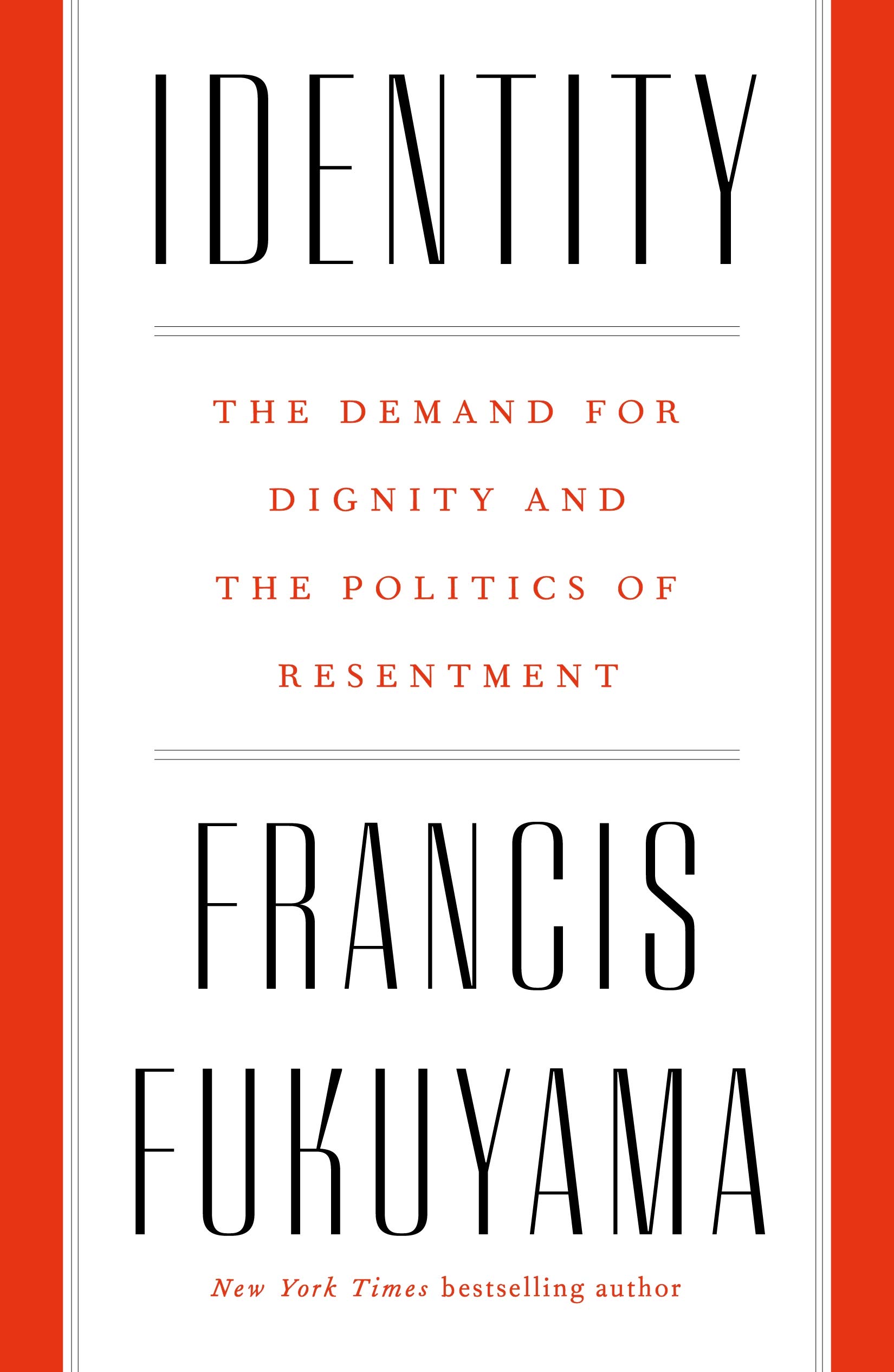
Book Review of Francis Fukuyama's: Identity, The Demand for Dignity and the Politics of Resentment

Resultado de imagen para Identity, The Demand for Dignity and the Politics of Resentment.Identity, The Demand for Dignity and the Politics of Resentment. (2018)

By:  Francis Fukuyama

Why I got the Book: I  love Fukuyama's work, so I'm always ready to pick up and read one of his books.

What I liked :

Imagen relacionada•    I found it funny that Fukuyama explains that he was completely surprised by Trump's victory in the United States elections and of Brexit. Fukuyama's initial hunch of what lead to these two major historical events was the rise of populism and authoritarian governments across many democracies, being fed by the decay of classic democratic institutions, like in Hungry, Turkey, Thailand, Poland...  while the Arab spring showed how weak democratic revolutions can be.
•    If you're a newbie to the world of political philosophy and theory of the State, one can learn a lot in this book.
•    The book explores the world of identity politics and Francis takes great effort to define identity itself and how this concept has evolved over the years.
•    Fukuyama revindicates Samuel Huntington in this book citing him and defending his work.
Identity politics for Fukuyama by no means are consider as a bad thing, for him it does seek change culture and behavior, to try to respond and amend an injustice affecting that group.    


Central Thymes:
•    Modern nationalist populist are described by Fukuyama initially by rising to power legitimately through democratic means, they claim a connection to the people through narrow ethnic/cultural terms, do not like basic democratic institutions always putting them in question and seek to undermind the check and balances that are fundamental to the health of democracy.
•    Two core concepts the book revolves around is Isothumia the demand to be respected on an equal basis with other people or groups and Megalothumia the desire to be recognized as superior. Fukuyama explains that Isothumia and Megalothumia can and do feed into each other.
•    Francis make a fascinating affirmation that liberal capitalist democracies have created a world order that has lead to a great inequality amongst  the populations of many nations but overall humanity, in general, is better off in general with many social and economic indicators better than ever but there is a great concentration of power  in  elites across the globe, the rise of new oligarchs in many State across the globe. Elites that are viewed are the ones responsible for the Economic crash in the US in 2008 and the crisis in Greece, there has been the perception of the hollowing out of the middle class. 
•    The author explains the evolution of the Left and Right of the political spectrum and how they change, with the left shifting focus from  equality of workers, trade unions, social protection, and economic redistribution now fixated on groups that view themselves as marginalized, diving head first into identity politics. While the right that centered their views of freedom, reducing the size of government and the promotion of the private sector, but  also now indulging in identity politics in the search of the true patriots who will protect national identity defined by race, ethnicity and/ or religion.
•    Transnational elites vs. patriotic national elite that fighting their proper respect and recognition.
•    The book establishes that Identity is how one defines ones inner self but also how the social world with its rules and norms shapes one's identity giving it or not recognition and importance, basically your worth and dignity. Now in modern times, the inner self is intrinsically valuable and the outer society is systematically wrong. One must not conform to the rules that society imposes, it must change one must find and receive recognition, self-esteem has become paramount.
•    Fukuyama explains that traditionally it is established the individual are rational utility maximizers, who seek to benefit their own self interest and if they cooperate with others it is to reach this goal. But the rational choice paradigm and behavior economics cannot explain preferences and identity politics, where status, dignity, and honor are fundamental and become political rights. And in these modern times, the desire for equal recognition has changed for the validation of the group's superiority. There an obsession with the idea of validation and authenticity, while feeling varying degrees of resentment and humiliation, the author uses the example of the Arabe Spring.
•    Francis writes that when a minimal common culture is perpetually put into question a shared moral horizon starts to disappear competing with a cacophony of competing values systems, many people do not enjoy this situation of this new found freedom, many people feel an intense insecurity and alienation. While we have the rise therapeutic liberalism, product of the rise and incorporation of psychology within many disciplines within the social sciences and in public policy since the mid '80s has lead to the politicization of the recognition of self-esteem and lived experiences, that does not worry about a just or unjust society, but focus on rules that retrain and recognition. The problem this creates a great divergence amongst groups which have different shared experiences, causing that it impossible to see eye to eye on any key issues and social media feeds into this tremendously. 
•    Nationalism and politicized religion create a collective identity and are really good at diagnosing problems and each have their way of solving these problems, they are willing to play the democratic game to reach their illiberal objectives. They feel disrespected and they feel a great nostalgia for an imagined past, author uses the example of second and third generation Muslims in Europe, that turn to jihadist who are mostly disenfranchised and marginalized young adults many time petty criminals and or parts of gangs, the motivation of their conversion is more personal and sociological than religious, fueled by the problem of identity the rejection of their parents identities and their host societies. 
•     The Middle class is a theme that the author revolves around a lot in this book, which seeks respect and are politically motivated, they feel threatened and have really pushed the rise of nationalism across many countries, feeling the poor or unworthy  (migrants for example)   are eating away at their well being and unfairly favored, while feeling invisible or ignored by the ruling elites.  People of the middle class feel like the work hard than the rest and play by the rules, and feel it's unjust that they are unseen they perceive their status is being trampled on. The nationalist discourse they are holding you down find an echo in these people.  
•    The book gets into the evolution of the left during the past 50 years which started to fixate on culture, especially on institutions that opressed minorities at home and on developing nations. Multiculturalism became the predominant form of public policy, but this lead to many immigrant communities not wanting to integrate themselves in their host societies, in the case of Europe Salafist community leaders pushed for this, and the left recognized these political figures for being the more authentic representatives of their community than the westernized Muslims.
•    In the social/political discourse opinions become privileged over reason, and everything is driven by identity, also a short form dissertation reign in the world of social media feeds into this. Identity politics can start producing feedback in a way that makes political correctness more and more important, And this happens on both sides of the political spectrum eventhough it started on the fringes of the left.
•    Identity becomes none negotiable in the way they are conceived today, have paved the way to the death of political debate.
•    Society needs to protect the excluded and marginalized but also establish common goals, national identity creates the shared belief in the countries political system whether it be democratic or not. This identity can be embodied informal laws and institutions, for example, the recognition of an official national language .A official history within school curriculums plays a fundamental role in the construction of a common identity among many other things the state can do for its construction. The promoter of culture like poets, filmmakers, artist, musicians... tend to have a special place in culture. If people constantly question  there national identity seeking refuge in the more personal definition of identity, basically over time you'll have a  community not willing to seek common goals with other groups to achieve common national goals, this also eats away a the trust among communities killing social capital.
•    Fukuyama does not like the concept of dual nationality, ius solis should define nationality, assimilation is fundamental, common school desegregate communities, civics classes are extremely fundamental, the border must be controlled but a proper migratory policy needs
      
  
What I didn't like or Debatable Stuff:
•    The author revisits certain aspects of the theory of States and political philosophy that he has already touched in other books, it seems to be his go-to place for filler for Fukuyama.    
Overall:

domingo, 5 de noviembre de 2017

Devil's Bargain: Steve Bannon, Donald Trump, and the Storming of the Presidency By: Joshua Green.


Why I Bought This Book:  I actually had seen the author on of CNN panel debating the role of Steve Bannon in Donald Trump's government. And obviously the Joshua made a reference that he had written a book on the subject,  and I have been fascinated by the rise of Trump and I knew nothing about one of the masterminds behind his improbable victory, so I set out to get my hands on this book, but it was very unlikely that this publication would ever come out here in  Argentina, where I live. As result of this I tried using audible for the first time and I must say it took some time to get used to, it's a different experience compared to sitting down and reading a real book, it's frustrating not being able to underline what I liked about the book, but I did like it more than a normal digital book. Also, I must say I had a little problem with Audible when they tried to bill me, which was fixed really quick, but the thing is that they gave me two more free books for the inconvenience that super cool of them
   
Central Thymes:
•   Green explains that Steve Bannon is a man with an unbreakable will, never relenting in pushing his agenda, and always striving to be the villain.  For Bannon presenting himself as a bad guy actually falls into his favor because it pushes his adversaries to react, and hopefully in the way he wants, the author presents him as a man that is an expert an at pushing peoples buttons. The Author also describes him as a brilliant ideologist and opportunist.
•    Bannon was obsessed with stopping Hillary Clinton from getting the presidency, he hated what he perceived as her elitest agenda. Bannon affirmed that if she had won the election he would have had unleashed such a media onslaught on her she would not be able to govern, setting to destroy her image and her legitimacy. Steve fed the narrative that she was part of an international financial conspiracy to rob the common man through their corruption.  Now  I must add that Hillary was a freaking sitting duck for Bannon, she was the worst candidate for the Democrats, she had too much baggage and she was painfully unlikeable. But it must be noted that Bannon mostly ignored the Clinton conspiracies, he mostly focused on the questionable origin of the cash that was pumped into the Clinton foundation when she was secretary of State.   
•    Up until his involvement with Trump, Bannon was just as despised by Republicans as he was by Democrats.
•    Bannon viewed Trump as a part of a global phenomena, the rise of the populist right and has a deterministic view of history.
•    The centerpiece of Bannon's policy for Trump centered around open hostility against illegal migrants and the menace there are for the country. Green establishes this is the basis of a new type of nationalism 2.0,  that focused on easy target illegal migrants. I must add they focused people that had very little means of fight back, marginalized and tend to be poor, so it's like shooting fish in a political barrel.  
•    Author establishes that Bannon loved Trump F you atitude and confrontational nature, in a way he found a kindered spirit.
•    Green affirms that Trump winning the election was a confluence of circumstances led him to victory, with a lot of help from Hillary's slip-ups which were capitalized by Steve Bannon masterfully.
•    Bannon viewed traditional hardcore conservative trapped in a bubble predicating to their own , that were never taken seriously and could not reach a mainstream audience. But Conservative and Bannon had the obsession in the Clintons and had to stop Hilary at any cost and he tapped into this to exploit their political capital.
•    Trump's first baby steps into the political world were advocating that Obama was not born in the United State, being part of the Birther movement. Now Green establishes that Obama's roasting of the Trump at the Correspondents Dinner over this issue, triggered something in Trump to take politics seriously.    
•    Bannon comes from a very conservative hard right Catholic family, Steve and his family view themselves as working class Democrats. But  Steve lost his faith in the Democrats and in the government in general after being many years in the Navy and seeing how painfully bureaucratic it was, but what really made him change his political and social views was actually participated in a failed plan to rescue the American hostages in Iran during the late 70's early 80's, the way the Carter administration and the military completely bumbles rescue of the hostages just drove Steve crazy and after this he became a fool blown hawk Republican. Also, the author establishes that during Steve's time in the military, he served many years in Asia and in the Middle East, after encountering Muslim countries for the first time, he started to feel a profound disdain for Muslims and felt they were a backward and primitive society.
•    Steve Bannon has a keen eye for finding political capital, or groups of individuals that had potential political capital. For example Bannon discovers online gaming communities like the one for the game the World of Warcraft, he realized that the people that participated in these comunities were smart, had money, were focused and motivated a true political goldmind. And I must add older generations tend to underestimate gamers in general and discard them as adults that are just immature, and gamers know this, now I think Bannon understood this, that older gamers feel contempt for the establishment and later he would use this to reach his political goals.
•    Bannon learns from Andrew Brightbart to create a true social-political change, the cultural narrative must be modified, instead of trying to change institutions. They both went after political correctness and secular liberals because they were easy targets. For Example, Brightbart's style did not focus on new as a clinical exercise in absorbing facts but as visceral narration or drama with heroes and villain, he was a storyteller and this is what Bannon learned when he was taken under his wing.
•    Trump and Bannon viewed the US as victims of foreign trade and globalist. A both had a strong antimigrant position. In the case of Bannon, in Obama's second term he wanted to push for immigration reform, Steve worked 24/7 using the full might of Brightbart to focus on the Border crisis of the unaccompanied minors that had arrived in droves at the southern border. During the campaign, the Wall was the only topic that could keep Trump centered and on message. Another core topic to the campaign was that the government and the political establishment had failed and there for Paul Ryan, a major Republican was just as much an enemy as Hillary Clinton.
•    As Trump progressed in his political focus to become president his views of the world changed. While The Apprentice was running it was popular with minorities, it had a strong multiracial base among its participants and audience and it also drew advertisers because of this. But his   Trump becoming a Birther jumping into the political world in such a racist way cost the program a major drop in ratings. It must be noted that Brightbart never advocated for the birther movement.
•    For Bannon mainstream media was not the enemy, he did not want to get his message boxed into the conservative bubble, he needed platforms like CNN and Fox, and he also needed a messenger and Donalds was perfect even though he was not his first pick. Trump was able to cross easily between the mainstream and the conservative world and even touch the fringe elements of the write, and Steve was able to take advantage of this.
•    Steve Bannon view of the world stage were very pesimistic, western civilization in crisis, Jihadist were islamic faschist and Russia is doing things right, and even though this isn't the book Putin for Bannon problebly a model States man.
•    Bannon is not a rasist and acknogled that these elements are part of right wing parties especially in populism, that get washed away overtime, a undisered waystation for populist movments.


What I liked:
•    The book is very focused and the author has organized the information very effectively, explains exactly what it wants and how it was obtained, through a series of interviews with most of the people that the book actually writes about, including Bannon and Trump themselves. Joshua tells a chronological account of the biography of Steve Bannon and partial account of Trump's beginnings, then he establish how Trump   got into politics and how  these two men started to work with each other.
•    Even the book centers around the story of Steve Bannon, Trump and their rise to power, it does explain with great detail the theoretical backing that Bannon uses and his views of the world, without bogging the book down, making the experience of reading this book much richer.
•    I didn't know that Brightbart was such a force in America politics, the author establishes that they were instrumental in the government shut down of 2013 (note I'm going to have to look that up).
•    Fascinating peek into the minute by minute of election night that changed US politics forever, the way the author narrates this park of the book is riveting because even though you know the outcome he really builds the tension.
•    One of the most intriguing parts of the book when the author goes into the part of Bannon's life when he dives into show business and into the world of video games. 
Green resists take cheap shots at Bannon and on Trump.

Overall: 9 out of 10, facinating and well written.