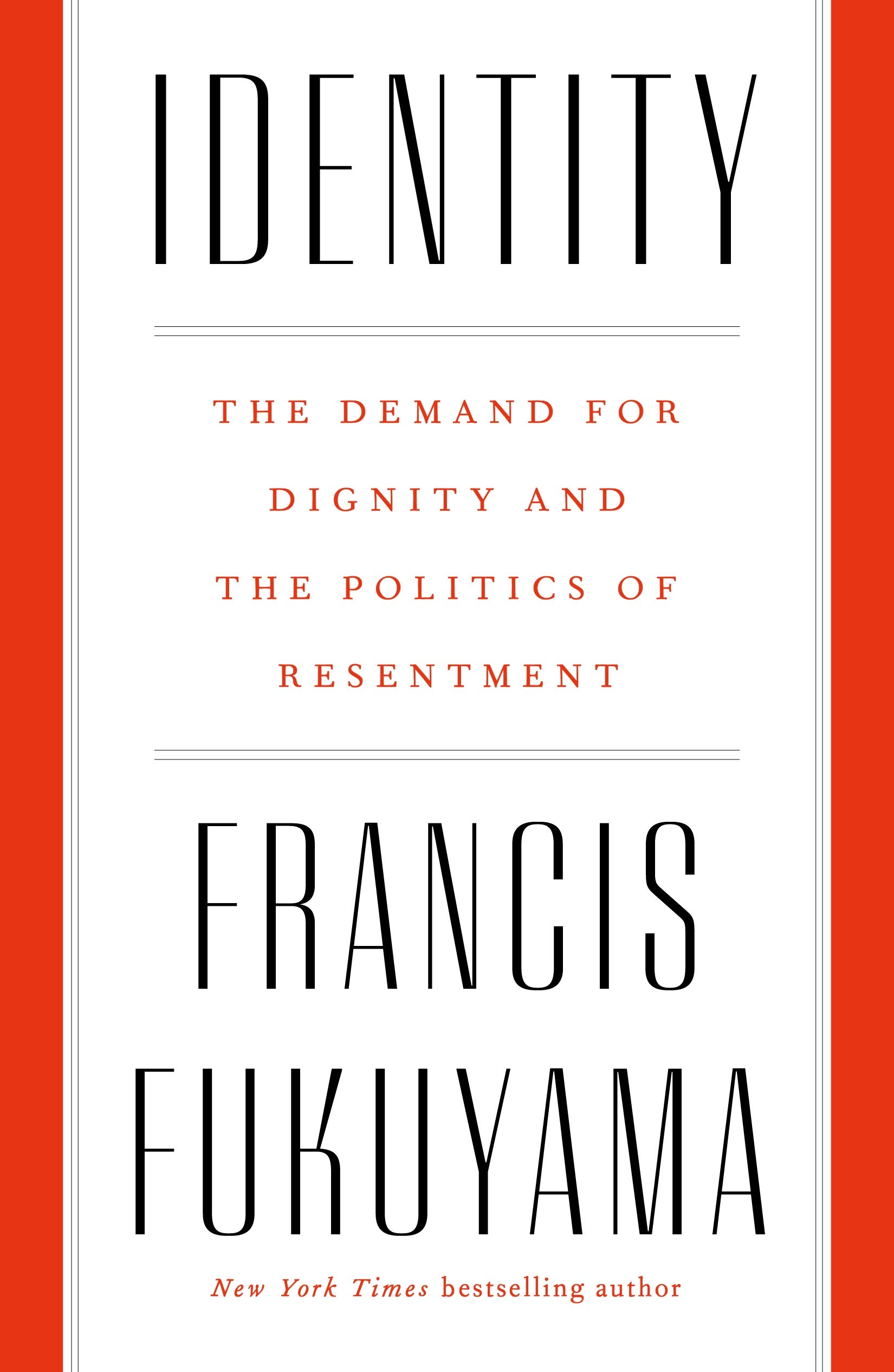
 Identity, The Demand for Dignity and the Politics of Resentment. (2018)
By: Francis Fukuyama
Why I got the Book: I love Fukuyama's work, so I'm always ready to pick up and read one of his books.
What I liked :
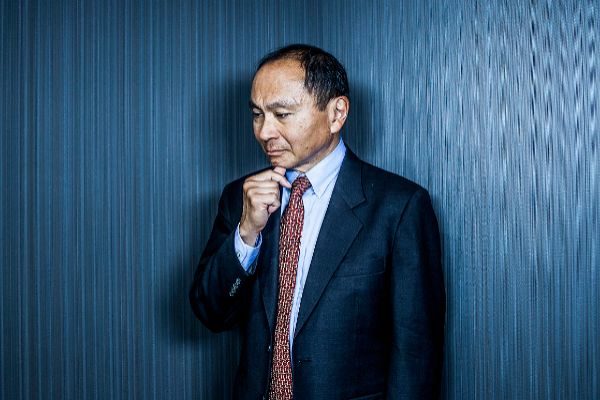 • I found it funny that Fukuyama explains that he was completely surprised by Trump's victory in the United States elections and of Brexit. Fukuyama's initial hunch of what lead to these two major historical events was the rise of populism and authoritarian governments across many democracies, being fed by the decay of classic democratic institutions, like in Hungry, Turkey, Thailand, Poland... while the Arab spring showed how weak democratic revolutions can be.
• If you're a newbie to the world of political philosophy and theory of the State, one can learn a lot in this book.
• The book explores the world of identity politics and Francis takes great effort to define identity itself and how this concept has evolved over the years.
• Fukuyama revindicates Samuel Huntington in this book citing him and defending his work.
Identity politics for Fukuyama by no means are consider as a bad thing, for him it does seek change culture and behavior, to try to respond and amend an injustice affecting that group.
Central Thymes:
• Modern nationalist populist are described by Fukuyama initially by rising to power legitimately through democratic means, they claim a connection to the people through narrow ethnic/cultural terms, do not like basic democratic institutions always putting them in question and seek to undermind the check and balances that are fundamental to the health of democracy.
• Two core concepts the book revolves around is Isothumia the demand to be respected on an equal basis with other people or groups and Megalothumia the desire to be recognized as superior. Fukuyama explains that Isothumia and Megalothumia can and do feed into each other.
• Francis make a fascinating affirmation that liberal capitalist democracies have created a world order that has lead to a great inequality amongst the populations of many nations but overall humanity, in general, is better off in general with many social and economic indicators better than ever but there is a great concentration of power in elites across the globe, the rise of new oligarchs in many State across the globe. Elites that are viewed are the ones responsible for the Economic crash in the US in 2008 and the crisis in Greece, there has been the perception of the hollowing out of the middle class.
• The author explains the evolution of the Left and Right of the political spectrum and how they change, with the left shifting focus from equality of workers, trade unions, social protection, and economic redistribution now fixated on groups that view themselves as marginalized, diving head first into identity politics. While the right that centered their views of freedom, reducing the size of government and the promotion of the private sector, but also now indulging in identity politics in the search of the true patriots who will protect national identity defined by race, ethnicity and/ or religion.
• Transnational elites vs. patriotic national elite that fighting their proper respect and recognition.
• The book establishes that Identity is how one defines ones inner self but also how the social world with its rules and norms shapes one's identity giving it or not recognition and importance, basically your worth and dignity. Now in modern times, the inner self is intrinsically valuable and the outer society is systematically wrong. One must not conform to the rules that society imposes, it must change one must find and receive recognition, self-esteem has become paramount.
• Fukuyama explains that traditionally it is established the individual are rational utility maximizers, who seek to benefit their own self interest and if they cooperate with others it is to reach this goal. But the rational choice paradigm and behavior economics cannot explain preferences and identity politics, where status, dignity, and honor are fundamental and become political rights. And in these modern times, the desire for equal recognition has changed for the validation of the group's superiority. There an obsession with the idea of validation and authenticity, while feeling varying degrees of resentment and humiliation, the author uses the example of the Arabe Spring.
• Francis writes that when a minimal common culture is perpetually put into question a shared moral horizon starts to disappear competing with a cacophony of competing values systems, many people do not enjoy this situation of this new found freedom, many people feel an intense insecurity and alienation. While we have the rise therapeutic liberalism, product of the rise and incorporation of psychology within many disciplines within the social sciences and in public policy since the mid '80s has lead to the politicization of the recognition of self-esteem and lived experiences, that does not worry about a just or unjust society, but focus on rules that retrain and recognition. The problem this creates a great divergence amongst groups which have different shared experiences, causing that it impossible to see eye to eye on any key issues and social media feeds into this tremendously.
• Nationalism and politicized religion create a collective identity and are really good at diagnosing problems and each have their way of solving these problems, they are willing to play the democratic game to reach their illiberal objectives. They feel disrespected and they feel a great nostalgia for an imagined past, author uses the example of second and third generation Muslims in Europe, that turn to jihadist who are mostly disenfranchised and marginalized young adults many time petty criminals and or parts of gangs, the motivation of their conversion is more personal and sociological than religious, fueled by the problem of identity the rejection of their parents identities and their host societies.
• The Middle class is a theme that the author revolves around a lot in this book, which seeks respect and are politically motivated, they feel threatened and have really pushed the rise of nationalism across many countries, feeling the poor or unworthy (migrants for example) are eating away at their well being and unfairly favored, while feeling invisible or ignored by the ruling elites. People of the middle class feel like the work hard than the rest and play by the rules, and feel it's unjust that they are unseen they perceive their status is being trampled on. The nationalist discourse they are holding you down find an echo in these people.
• The book gets into the evolution of the left during the past 50 years which started to fixate on culture, especially on institutions that opressed minorities at home and on developing nations. Multiculturalism became the predominant form of public policy, but this lead to many immigrant communities not wanting to integrate themselves in their host societies, in the case of Europe Salafist community leaders pushed for this, and the left recognized these political figures for being the more authentic representatives of their community than the westernized Muslims.
• In the social/political discourse opinions become privileged over reason, and everything is driven by identity, also a short form dissertation reign in the world of social media feeds into this. Identity politics can start producing feedback in a way that makes political correctness more and more important, And this happens on both sides of the political spectrum eventhough it started on the fringes of the left.
• Identity becomes none negotiable in the way they are conceived today, have paved the way to the death of political debate.
• Society needs to protect the excluded and marginalized but also establish common goals, national identity creates the shared belief in the countries political system whether it be democratic or not. This identity can be embodied informal laws and institutions, for example, the recognition of an official national language .A official history within school curriculums plays a fundamental role in the construction of a common identity among many other things the state can do for its construction. The promoter of culture like poets, filmmakers, artist, musicians... tend to have a special place in culture. If people constantly question there national identity seeking refuge in the more personal definition of identity, basically over time you'll have a community not willing to seek common goals with other groups to achieve common national goals, this also eats away a the trust among communities killing social capital.
• Fukuyama does not like the concept of dual nationality, ius solis should define nationality, assimilation is fundamental, common school desegregate communities, civics classes are extremely fundamental, the border must be controlled but a proper migratory policy needs
What I didn't like or Debatable Stuff:
• The author revisits certain aspects of the theory of States and political philosophy that he has already touched in other books, it seems to be his go-to place for filler for Fukuyama.
Overall:


