Mostrando entradas con la etiqueta Populism. Mostrar todas las entradas

martes, 18 de junio de 2019

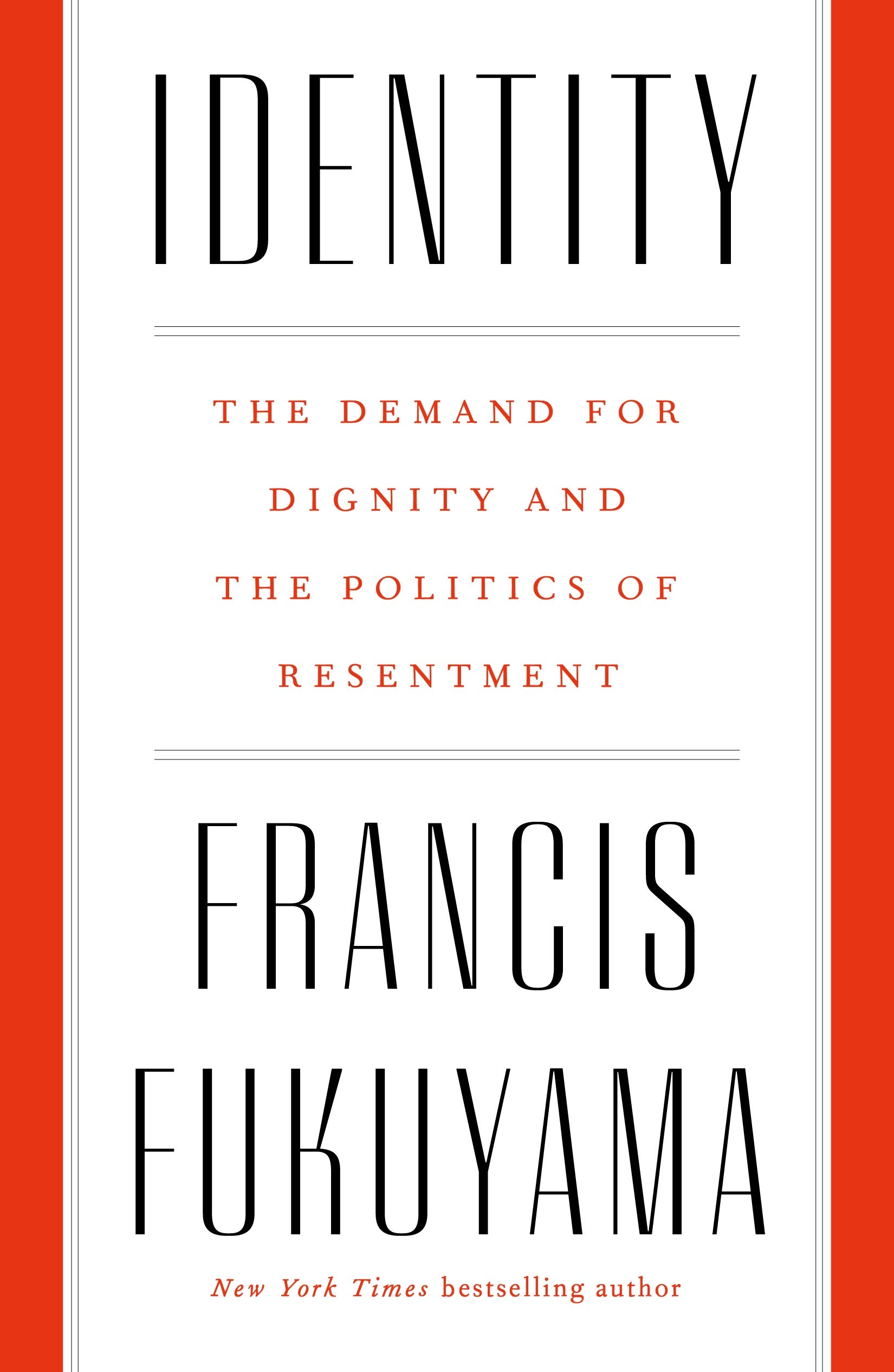
Book Review of Francis Fukuyama's: Identity, The Demand for Dignity and the Politics of Resentment

Resultado de imagen para Identity, The Demand for Dignity and the Politics of Resentment.Identity, The Demand for Dignity and the Politics of Resentment. (2018)

By:  Francis Fukuyama

Why I got the Book: I  love Fukuyama's work, so I'm always ready to pick up and read one of his books.

What I liked :

Imagen relacionada•    I found it funny that Fukuyama explains that he was completely surprised by Trump's victory in the United States elections and of Brexit. Fukuyama's initial hunch of what lead to these two major historical events was the rise of populism and authoritarian governments across many democracies, being fed by the decay of classic democratic institutions, like in Hungry, Turkey, Thailand, Poland...  while the Arab spring showed how weak democratic revolutions can be.
•    If you're a newbie to the world of political philosophy and theory of the State, one can learn a lot in this book.
•    The book explores the world of identity politics and Francis takes great effort to define identity itself and how this concept has evolved over the years.
•    Fukuyama revindicates Samuel Huntington in this book citing him and defending his work.
Identity politics for Fukuyama by no means are consider as a bad thing, for him it does seek change culture and behavior, to try to respond and amend an injustice affecting that group.    


Central Thymes:
•    Modern nationalist populist are described by Fukuyama initially by rising to power legitimately through democratic means, they claim a connection to the people through narrow ethnic/cultural terms, do not like basic democratic institutions always putting them in question and seek to undermind the check and balances that are fundamental to the health of democracy.
•    Two core concepts the book revolves around is Isothumia the demand to be respected on an equal basis with other people or groups and Megalothumia the desire to be recognized as superior. Fukuyama explains that Isothumia and Megalothumia can and do feed into each other.
•    Francis make a fascinating affirmation that liberal capitalist democracies have created a world order that has lead to a great inequality amongst  the populations of many nations but overall humanity, in general, is better off in general with many social and economic indicators better than ever but there is a great concentration of power  in  elites across the globe, the rise of new oligarchs in many State across the globe. Elites that are viewed are the ones responsible for the Economic crash in the US in 2008 and the crisis in Greece, there has been the perception of the hollowing out of the middle class. 
•    The author explains the evolution of the Left and Right of the political spectrum and how they change, with the left shifting focus from  equality of workers, trade unions, social protection, and economic redistribution now fixated on groups that view themselves as marginalized, diving head first into identity politics. While the right that centered their views of freedom, reducing the size of government and the promotion of the private sector, but  also now indulging in identity politics in the search of the true patriots who will protect national identity defined by race, ethnicity and/ or religion.
•    Transnational elites vs. patriotic national elite that fighting their proper respect and recognition.
•    The book establishes that Identity is how one defines ones inner self but also how the social world with its rules and norms shapes one's identity giving it or not recognition and importance, basically your worth and dignity. Now in modern times, the inner self is intrinsically valuable and the outer society is systematically wrong. One must not conform to the rules that society imposes, it must change one must find and receive recognition, self-esteem has become paramount.
•    Fukuyama explains that traditionally it is established the individual are rational utility maximizers, who seek to benefit their own self interest and if they cooperate with others it is to reach this goal. But the rational choice paradigm and behavior economics cannot explain preferences and identity politics, where status, dignity, and honor are fundamental and become political rights. And in these modern times, the desire for equal recognition has changed for the validation of the group's superiority. There an obsession with the idea of validation and authenticity, while feeling varying degrees of resentment and humiliation, the author uses the example of the Arabe Spring.
•    Francis writes that when a minimal common culture is perpetually put into question a shared moral horizon starts to disappear competing with a cacophony of competing values systems, many people do not enjoy this situation of this new found freedom, many people feel an intense insecurity and alienation. While we have the rise therapeutic liberalism, product of the rise and incorporation of psychology within many disciplines within the social sciences and in public policy since the mid '80s has lead to the politicization of the recognition of self-esteem and lived experiences, that does not worry about a just or unjust society, but focus on rules that retrain and recognition. The problem this creates a great divergence amongst groups which have different shared experiences, causing that it impossible to see eye to eye on any key issues and social media feeds into this tremendously. 
•    Nationalism and politicized religion create a collective identity and are really good at diagnosing problems and each have their way of solving these problems, they are willing to play the democratic game to reach their illiberal objectives. They feel disrespected and they feel a great nostalgia for an imagined past, author uses the example of second and third generation Muslims in Europe, that turn to jihadist who are mostly disenfranchised and marginalized young adults many time petty criminals and or parts of gangs, the motivation of their conversion is more personal and sociological than religious, fueled by the problem of identity the rejection of their parents identities and their host societies. 
•     The Middle class is a theme that the author revolves around a lot in this book, which seeks respect and are politically motivated, they feel threatened and have really pushed the rise of nationalism across many countries, feeling the poor or unworthy  (migrants for example)   are eating away at their well being and unfairly favored, while feeling invisible or ignored by the ruling elites.  People of the middle class feel like the work hard than the rest and play by the rules, and feel it's unjust that they are unseen they perceive their status is being trampled on. The nationalist discourse they are holding you down find an echo in these people.  
•    The book gets into the evolution of the left during the past 50 years which started to fixate on culture, especially on institutions that opressed minorities at home and on developing nations. Multiculturalism became the predominant form of public policy, but this lead to many immigrant communities not wanting to integrate themselves in their host societies, in the case of Europe Salafist community leaders pushed for this, and the left recognized these political figures for being the more authentic representatives of their community than the westernized Muslims.
•    In the social/political discourse opinions become privileged over reason, and everything is driven by identity, also a short form dissertation reign in the world of social media feeds into this. Identity politics can start producing feedback in a way that makes political correctness more and more important, And this happens on both sides of the political spectrum eventhough it started on the fringes of the left.
•    Identity becomes none negotiable in the way they are conceived today, have paved the way to the death of political debate.
•    Society needs to protect the excluded and marginalized but also establish common goals, national identity creates the shared belief in the countries political system whether it be democratic or not. This identity can be embodied informal laws and institutions, for example, the recognition of an official national language .A official history within school curriculums plays a fundamental role in the construction of a common identity among many other things the state can do for its construction. The promoter of culture like poets, filmmakers, artist, musicians... tend to have a special place in culture. If people constantly question  there national identity seeking refuge in the more personal definition of identity, basically over time you'll have a  community not willing to seek common goals with other groups to achieve common national goals, this also eats away a the trust among communities killing social capital.
•    Fukuyama does not like the concept of dual nationality, ius solis should define nationality, assimilation is fundamental, common school desegregate communities, civics classes are extremely fundamental, the border must be controlled but a proper migratory policy needs
      
  
What I didn't like or Debatable Stuff:
•    The author revisits certain aspects of the theory of States and political philosophy that he has already touched in other books, it seems to be his go-to place for filler for Fukuyama.    
Overall:

lunes, 24 de octubre de 2016

The Book review and Analysis of: The Lie of Populism / El Engaño Populista review and Analysis (work in progress)

Here my video on the subject: Check it out

 
So taking a quick break from my Migratory Policy stuff   I wanted to start working on my book review and analysis of  El Engaño Populista which translates, sort of, The Sham of Populism by Axel Kaiser and Gloria Alvarez. It's about the rise of Populism in Latin America  and how it has ruined each local political system where it takes power. Now I'm not normally drawn to this subject, Populism or Latin America in general, they are just not my thing, even though I live in Argentina, I'm more into power politics, war, migrants, refugees, religion... things of that nature, but just out of chance I met the one of the authors, Gloria Alvarez who is a political youtuber and has degree in International Relation just like me.  I met her at  my job and she  invited to the presentation of this book here at the local State  University. So I went, it seemed interesting and I bought the book, now when the presentation started I was floored by how by how much bush shit came out of these people mouths, there where presenting this book as a academic study and it was Ideological as hell, there were moments that they straight up lied, at one moment I actually interupted the presentation, couldn't take it anymore. I was starting to get pist  hearing how these guys where telling half truths and purposefully misrepresenting political concepts and people were eating it up, because there is a strong backlash against Populism here in Argentina so people consume basically anything that is against it, but this was going too far because in the way the information was presented some scary hard hard right ultra liberal stuff was being spoon fed. It was funny to see them use the same indoctrination tools that populist  use in their political message.
Imagen relacionada
Axel Kaiser

Now it going to take me awhile  to finish this review I actually find mistakes, misrepresentations and omissions on every other page, so it makes reading this book painstakingly slow. And I must say I lived through 12 years of Kirchnerism and I'm no fan of them what so ever, especial the cult of personality around Nestor and Cristina just drove me crazy, so I'm no expert on the subject but I understand it, but they did some positive things, like some really counterproductive things, but I'm not going to allow these authors get away presenting a book as academic when its irresponsible ideological propaganda, with total disregard for historical facts.


Central thymes:
·         Populism and socialism are bad, very bad, they are evil, the book hammers in this idea the whole book.
·         Latin America lived through a political Apocalypse during the wave of Populist governments that characterized the region during the 2000's. 
·         The rule of law, individual liberties, property and freedom cannot be reduced or limited by circumstantial majorities.
·         People that live in Latin America and especially Populist countries have  a victim complex, sadly I'm on the same page with this book on this subject, all the problems of the country is some ones else's fault, for example the imperialist United States. From my point of view not taking responsibility for the problem leads that you cannot fix them adequately, because in the case of populist governments they have a tendencies in believing their own bullshit overtime. 
·         These government cannot create the proper institution to prevail.
·         Populist leaders are charismatic politicians that  present themselves as saviors.
·         They create a binary  political discourse of the people/pueblo and anti-people / anti-pueblo, use and project that mentality, the dangerous other within and outside of the society is fundamental in populism. Now I concur with the book on this point to, I've noticed that populist as of late, from left and right have a particular love for going after journalist, reporters and new agencies they don't like, elevating them to a public enemy status.


Resultado de imagen para gloria alvarez
Gloria Alvarez
What I liked and what fascinated me:
·         Its captivating trip into the minds people that view the world from a  hard economically liberal right.
·         The book condones populism but sure loves to use passionate language like they do, this fascinating to see how hypocritical the authors are.
·         The book has the balls to put Chavez, Castro, the Kirchners, Lula Da Silva, Evo  Morales, Correa, Bachelet, Rouseff...in the same bag. But  even though each of these governments leaned to the left having varying degrees of socialisms in the way they governed, they were very different one from another. And it's interesting to see that the book over looked Mujica from Uruguay, one of the most interesting politicians that comes from the left.
·         The book establishes that these countries have pretentions of being democratic, but are not, even in all cases they came to power democraticaly and in most cases are no in government democratically, like in Argentina and in Chile, so this is just a pile of malarkey.
·         "They hate freedom and want idolatry towards the State" p22, this affirmation just blew me away, look from my point of view many of these politicians just love the cult of personality and they use this as an affective political tool, but idolatry towards the State is a thing of fascism.
·         When describing populism the book, explains that populism is a deep decomposition on a mental level that projects its self on culture, institutions, economics  and politics, yup that sounds super academic.
·         Populism uses democracy dishonestly, it uses it to extend it powers not limit it. This is sort of correct, what they use is political clientelism and assistentialism as political tools to gain political capital, but this does not limit its self to populism, alone.
·         Book promotes the idea of totalitarian democracy, book has issues with people voting.
·         Book establishes the United States of America is perfect model  to follow. Yup they have no social or economic problems the resolve, and they recently voted into office a populist from the right.  

What I didn't like:
·         Book complains that people in Latin America do not understand the concept of  Republic, but the book make no effort in defining the concept for the readers.
·         Book has issues differentiating between politics, public policy and public administration.
·         The book almost deliberately leave out the concept of the cult of personality in politics, to drive home the idea of the idolatry towards the State, which is something more pertinent to fascism.
·         Book does not define Populism.
·         The book treats the people as mindless idiots, that blind follow any charismatic leader.
·         Every type of social program in this book is just hand out for lazy people that are dependent on the government, that the oldest mantra from the liberal right if I ever heard one.
·         What left me speechless about this book is how easily it slabs fascism, with Nazis, socialism and communism, into one thing and establish they are basically all the same, which academicly is totally wrong. The book affirm that Hitler, Stalin, Mao, Chavez, Peron, Castro, Allende, Bachelet, the Kirchners... they are all the same, jajajaja. The author has some balls to put Bachelet and Hitler in the same category
·         They do establish the main diferance with the Nazis and populism in latin America, is that they did have a social and economic agenda, ¿What the Hell? The Nazi's social agenda was to create the racially perfect society for the arian race.
·         The Book uses the term Neoliberal a lot, but never defines the term.
·         The authors list countries that should be considered models to follow like Finland, Canada, Sweden, Germany, Denmark, Norway..., all countries that have a healthy and robust Welfare State, something that comes from the socialist side of the political spectrum, something this book just loves to hate. I guess the book thinks its readers are really stupid. Later it affirms that all countries that are socialist or have socialist inclination will end up as dictatorships and in misery, so people in Scandinavia, get ready you are totally screwed.
·         The Book has the balls to affirm that Peron was a straight up fascist, which is greatly over simplifying such a complex political figure such as Juan Domingo Peron.
·         The Book establishes that Pope Francis and the Catholic church have always been inclined to socialism and favor populist governments. ehhhhhhhh whaaa'???  Pope Francis may have some progressive left views of the world but, the Church as a whole has members that have a very diverse political views from across the political spectrum, from a hard right  to a progressive left, but never full on communist because of its atheist  nature. The book completely omits how John Paul the II fought communism  and the leftwing of his own church, or how the Church backed or  stood silent  when many rightwing economically liberal military governments toppled democratic governments across Latin America during the 60's, 70's and 80's (note many priest fell victim to these governments, there was a intense battle within the Church during this time).    
·         Book treats Pope Francis like any idiot, you can like him or not, you got to respect him because he had to deal with serous shit during his time as a priest during Argentina's military government, and never has backed down from his conviction. So taking cheap shots at him because you don't see eye to eye in politics or economic, just makes you look bad.      

 
To finish the book establishes that democracy in Latin America is broken in Latin America, and populism has taken it hostage, but here in Argentina after 12 years of populism, a center right party won the election, free and fair. And these populist have not questioned if this new administration is legitimate, so even though populism can be counterproductive and even terrible in some cases, sometimes it's just a normal part of the political ecosystem, sometimes systemically it pushed to power and others time it pushed out because it not needed anymore.   


Overall: This book got me thinking and that is good, reached to a couple of conclusions myself on the subject, try to debunk the pile of lies in its pages. But I did realized on my own that populist leaders across the board left and right, never stop the elections campaigns literally, they are fixated on political rallies and on their hardcore base, they are fixated  partisan issues and messaging, they explicitly never pivot to the center moderating their message being more inclusive, they purposefully dived.    

Overall Rating: 1 out of 10