Mostrando entradas con la etiqueta international system. Mostrar todas las entradas

viernes, 8 de agosto de 2014

Political Theory-Migratory Policy: States Social Identity and how they Establish their Political Interests.


As we have seen on previus post Corporate identity is the engine that provides the initiative to the actor/States for their actions, but these are conditioned by the social relations of the actor, therefore the corporate identity depends on the relations of the subject with others (Wendt 1994; 356). Here is where we introduce the concept of social identity where the actor attributes meaning to itself and by doing this it takes perspective of the others actors, it is impossible to think an actor as a person who is completely alone in the world, likes it or not it must interact with others, to a greater or lesser extent this depends on each State. The two identities have a strong interrelation and feedback in to each other, to strengthen over time. But there is something one must keep in mind, that an actor has one corporate identity, but may have multiple social identities, but it is always limited and determined by the historical and cultural background of the actor. When one assumes an identity the actor also gives identity to others and in this context the vision of the State is born. Social identity can be simplified   in these terms, it the way the actor sees itself, how he sees others and how it’s seen. The vision of the actor in the world is born of this social identity. In the case of migratory policy we’ll see how the definition of a social identity condition de decisions of an actor, in this case Argentina.

Identity determines interest and therefore a change in any aspect of the Sates identity, will drag in a new group of interests. We are using the example of Argentina Migratory Policy in my post, to explain this point.  Initially you can see that the previous Immigration law caused dissociation between the actions [6] of the actor, social reality in its borders and its identity. Argentina’s view on migrants had a serious distortion of what was happening on a domestic level and on a international level, the old law that established its migratory policy did not serve the countries best interests, you can si a similar situation in the US  that has a high dissociation between its migration policy, social reality and their national identity, which has sparked a strong debate on what the government should do, this point will be developed in detail later in other posts. What we can say preliminarily is that currently that the Argentine identity revolves around the fact that sees itself and is seen by other States ( especially in the region), as a democratic country that respects human rights and that it had a historic role of reception of migrants.
Within the process of identity formation Wendt says that the actor uses imitation and social learning (Kowert; 2001), this is a borrowed concept from other constructivist author from another area of investigation, that is Jean Peaget, an expert in the psychology of education. We must establish whether Argentina immigration policy is the result of imitation or is a product of social learning. The actor learns to change their knowledge and perceptions of the world, and this is a dynamic process that is maturing over time, the perceived world is not a static place but is always changing.
Also can be exposed ahead of time that there is no doubt that the Argentina learned from their past mistakes committed during law 22.439 and capitalizes on that to create an immigration policy that is much more efficient, functional and that fits the needs of the country. One must ask what could have changed in the Government/State or within the population or what modification on the basis of their social relations, would lead to a change Argentina’s view, that made it change its migratory policy? Because something triggered an adjustment in policy and created a whole new theoretical body of knowledge, to be able to operate a new international and domestic reality. But this knowledge is not a copy of reality, here comes the factor of perception, one tends to see what best suits ones interests best, may be relatively selective according to the subject and this in turn is determined by the experience, needs and how the actor encodes and decodes the information that it receives from the world. The perceived world is a subjective world that can be shared by other actors or not.


If you like the review give me a hand and support me on Patreon at this Link that will make me, Matias Cavoti very happy to keep writing.


martes, 29 de julio de 2014

Cavoti's Black Box: Migratory Policy Part One

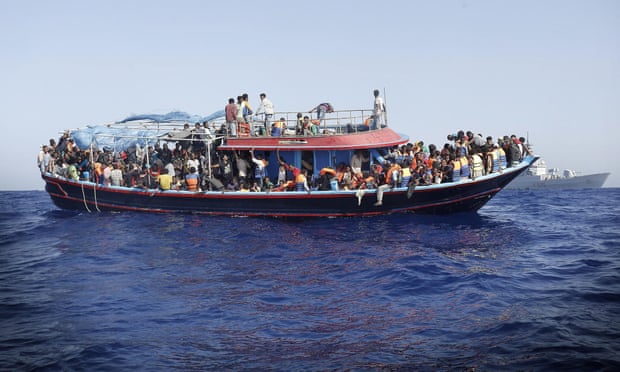
Hello my name is Matias Cavoti; I would like to welcome you to my blog where I’m going to write about my views about international politics, currents events, book reviews and other cultural phenomena. For my first series of blogs I’d like start off taking about migratory policy which has become during the last ten years a major international issue, especial during 2015 with the refugee crises in Europe and  immigration  has been a recurring issue during the Republican debate in the US during the past year. Befor we dive in here is a link to a video that I made on the subjet that we are going to work on Magratory Policy part I video, Now lets get back to business what we can say right off the bat we can say that Migratory Policy (MP) is an important political instrument and as I said before it a hot topic for many countries, especially for nations  that are the destination for large masses of immigrants, these recipient nations are in great need for tools to act and control migratory flows that are directed at them and thought a proper MP thatState can help a capitalize on it situation and also gain relative power. The objective for a migratory policy is to find a way to manage this flow of people and how can it serve best the needs/interests of the host country. Any action taken by a country in this matter will inevitably have an impact on the relationship between the nations where the migratory flow starts, transits and ends. 
 
The Migratory policy of a State can have a significant impact on the relationships between the actors in the international system, for example between the country that adopts the measure, and the State or States which expel migrants. The position taken by a country on this subject can strengthen bonds between the parties involved, such as investing in infrastructure that optimizes free movement of border transit with neighbor countries or on the contrary it produces conflicts, for example the expulsion or deportation of anyone who belongs to a certain nationality in a systematic manner without satisfactory reason or explanation. 


The overall objective of a migratory policy is to act on the influx of migrants that are trying to enter a country or the flow of people that are trying to leave. The argentine author Lelio Marmora classifies these policies in 4 categories: "retention, promotion, regulation, recover/ incorporation” (Marmora; 2004; p. 99), you have to keep in mind these policies are not exclusive or exclude any other political options. For a country to take one of these positions, it must define its migratory policy based on its interests and needs, but it is very important to take into account is how each State sees itself, how it establishes its identity, because this will influence its view of the world and how to act on transnational phenomenon like immigration, and finally this  will condition its decisions. In other words, needs and interests are conditioned by how a State defines its identity and its role in the international system; this is valid for any state and its view of any international situation. In the case immigrants are perceived differently by each actor; and because of this every State defines migrants differently to serve them best.

Something you must to add to the mix, is time, it’s another factor that affects perception on migrants, or on any international issue. An actors position on any question my change over time do to its experience. United States of America views immigrants very differently at the beginning of the 1900’s, than how they perceive them now. And finally the last ingredient is the location of a State its fundamental, migrants chose some states over others; do to means of transport to get there, climate, geo-economics reasons… etc. So we can conclude that time, space and identity, determines need and interest of a State, and in this case how to manage migrants. So because of this we can observe a very dynamic world in constant change where in many instances policy and/or laws tends to fall behind the true necessities of a state and here’s where the problems starts. Something very important you can infer from this is nothing last forever, everything end sooner or later or transformers in to something else, this is true with any international subject like immigration.


Guys check out my Video in the Subject on you tube  https://www.youtube.com/watch?v=sxwjH4TF7NE


Categorias


Archivo