domingo, 5 de noviembre de 2017

Devil's Bargain: Steve Bannon, Donald Trump, and the Storming of the Presidency By: Joshua Green.


Why I Bought This Book:  I actually had seen the author on of CNN panel debating the role of Steve Bannon in Donald Trump's government. And obviously the Joshua made a reference that he had written a book on the subject,  and I have been fascinated by the rise of Trump and I knew nothing about one of the masterminds behind his improbable victory, so I set out to get my hands on this book, but it was very unlikely that this publication would ever come out here in  Argentina, where I live. As result of this I tried using audible for the first time and I must say it took some time to get used to, it's a different experience compared to sitting down and reading a real book, it's frustrating not being able to underline what I liked about the book, but I did like it more than a normal digital book. Also, I must say I had a little problem with Audible when they tried to bill me, which was fixed really quick, but the thing is that they gave me two more free books for the inconvenience that super cool of them
   
Central Thymes:
•   Green explains that Steve Bannon is a man with an unbreakable will, never relenting in pushing his agenda, and always striving to be the villain.  For Bannon presenting himself as a bad guy actually falls into his favor because it pushes his adversaries to react, and hopefully in the way he wants, the author presents him as a man that is an expert an at pushing peoples buttons. The Author also describes him as a brilliant ideologist and opportunist.
•    Bannon was obsessed with stopping Hillary Clinton from getting the presidency, he hated what he perceived as her elitest agenda. Bannon affirmed that if she had won the election he would have had unleashed such a media onslaught on her she would not be able to govern, setting to destroy her image and her legitimacy. Steve fed the narrative that she was part of an international financial conspiracy to rob the common man through their corruption.  Now  I must add that Hillary was a freaking sitting duck for Bannon, she was the worst candidate for the Democrats, she had too much baggage and she was painfully unlikeable. But it must be noted that Bannon mostly ignored the Clinton conspiracies, he mostly focused on the questionable origin of the cash that was pumped into the Clinton foundation when she was secretary of State.   
•    Up until his involvement with Trump, Bannon was just as despised by Republicans as he was by Democrats.
•    Bannon viewed Trump as a part of a global phenomena, the rise of the populist right and has a deterministic view of history.
•    The centerpiece of Bannon's policy for Trump centered around open hostility against illegal migrants and the menace there are for the country. Green establishes this is the basis of a new type of nationalism 2.0,  that focused on easy target illegal migrants. I must add they focused people that had very little means of fight back, marginalized and tend to be poor, so it's like shooting fish in a political barrel.  
•    Author establishes that Bannon loved Trump F you atitude and confrontational nature, in a way he found a kindered spirit.
•    Green affirms that Trump winning the election was a confluence of circumstances led him to victory, with a lot of help from Hillary's slip-ups which were capitalized by Steve Bannon masterfully.
•    Bannon viewed traditional hardcore conservative trapped in a bubble predicating to their own , that were never taken seriously and could not reach a mainstream audience. But Conservative and Bannon had the obsession in the Clintons and had to stop Hilary at any cost and he tapped into this to exploit their political capital.
•    Trump's first baby steps into the political world were advocating that Obama was not born in the United State, being part of the Birther movement. Now Green establishes that Obama's roasting of the Trump at the Correspondents Dinner over this issue, triggered something in Trump to take politics seriously.    
•    Bannon comes from a very conservative hard right Catholic family, Steve and his family view themselves as working class Democrats. But  Steve lost his faith in the Democrats and in the government in general after being many years in the Navy and seeing how painfully bureaucratic it was, but what really made him change his political and social views was actually participated in a failed plan to rescue the American hostages in Iran during the late 70's early 80's, the way the Carter administration and the military completely bumbles rescue of the hostages just drove Steve crazy and after this he became a fool blown hawk Republican. Also, the author establishes that during Steve's time in the military, he served many years in Asia and in the Middle East, after encountering Muslim countries for the first time, he started to feel a profound disdain for Muslims and felt they were a backward and primitive society.
•    Steve Bannon has a keen eye for finding political capital, or groups of individuals that had potential political capital. For example Bannon discovers online gaming communities like the one for the game the World of Warcraft, he realized that the people that participated in these comunities were smart, had money, were focused and motivated a true political goldmind. And I must add older generations tend to underestimate gamers in general and discard them as adults that are just immature, and gamers know this, now I think Bannon understood this, that older gamers feel contempt for the establishment and later he would use this to reach his political goals.
•    Bannon learns from Andrew Brightbart to create a true social-political change, the cultural narrative must be modified, instead of trying to change institutions. They both went after political correctness and secular liberals because they were easy targets. For Example, Brightbart's style did not focus on new as a clinical exercise in absorbing facts but as visceral narration or drama with heroes and villain, he was a storyteller and this is what Bannon learned when he was taken under his wing.
•    Trump and Bannon viewed the US as victims of foreign trade and globalist. A both had a strong antimigrant position. In the case of Bannon, in Obama's second term he wanted to push for immigration reform, Steve worked 24/7 using the full might of Brightbart to focus on the Border crisis of the unaccompanied minors that had arrived in droves at the southern border. During the campaign, the Wall was the only topic that could keep Trump centered and on message. Another core topic to the campaign was that the government and the political establishment had failed and there for Paul Ryan, a major Republican was just as much an enemy as Hillary Clinton.
•    As Trump progressed in his political focus to become president his views of the world changed. While The Apprentice was running it was popular with minorities, it had a strong multiracial base among its participants and audience and it also drew advertisers because of this. But his   Trump becoming a Birther jumping into the political world in such a racist way cost the program a major drop in ratings. It must be noted that Brightbart never advocated for the birther movement.
•    For Bannon mainstream media was not the enemy, he did not want to get his message boxed into the conservative bubble, he needed platforms like CNN and Fox, and he also needed a messenger and Donalds was perfect even though he was not his first pick. Trump was able to cross easily between the mainstream and the conservative world and even touch the fringe elements of the write, and Steve was able to take advantage of this.
•    Steve Bannon view of the world stage were very pesimistic, western civilization in crisis, Jihadist were islamic faschist and Russia is doing things right, and even though this isn't the book Putin for Bannon problebly a model States man.
•    Bannon is not a rasist and acknogled that these elements are part of right wing parties especially in populism, that get washed away overtime, a undisered waystation for populist movments.


What I liked:
•    The book is very focused and the author has organized the information very effectively, explains exactly what it wants and how it was obtained, through a series of interviews with most of the people that the book actually writes about, including Bannon and Trump themselves. Joshua tells a chronological account of the biography of Steve Bannon and partial account of Trump's beginnings, then he establish how Trump   got into politics and how  these two men started to work with each other.
•    Even the book centers around the story of Steve Bannon, Trump and their rise to power, it does explain with great detail the theoretical backing that Bannon uses and his views of the world, without bogging the book down, making the experience of reading this book much richer.
•    I didn't know that Brightbart was such a force in America politics, the author establishes that they were instrumental in the government shut down of 2013 (note I'm going to have to look that up).
•    Fascinating peek into the minute by minute of election night that changed US politics forever, the way the author narrates this park of the book is riveting because even though you know the outcome he really builds the tension.
•    One of the most intriguing parts of the book when the author goes into the part of Bannon's life when he dives into show business and into the world of video games. 
Green resists take cheap shots at Bannon and on Trump.

Overall: 9 out of 10, facinating and well written.

martes, 29 de agosto de 2017

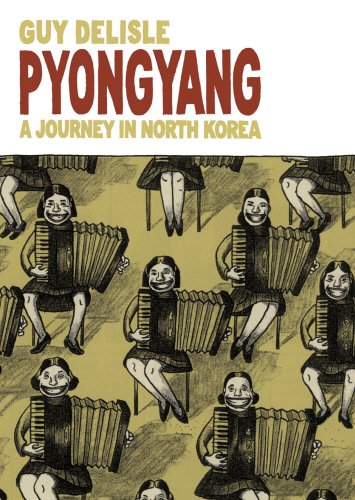
Book / Graphic Novel Review Pyongyang a voyage into North Korea. By Guy Delisle


Resultado de imagen para pyongyang guy delislePyongyang, a Voyage to North Korea  (2003)

By: Guy Delisle

Why I Bought This Book: a while back a coworker of mine started to ask me about North Korea and if the outlandish things that you hear about the country are true. So I asked him why the sudden interest in this hermit country and he explained to me that he had got this graphic novel that explored many of the crazy aspects of the country. So fascinated with the idea of a graphic novel about North Korea so I went to my local book store and got myself a  copy of this fascinating book.

The Story: Well the basic plot of the story is about the experiences of the author/illustrators having to work and live in North Korea, and I don't want to spoil too much talking about some of the absurd situations Guy gets himself into.  

What I liked and  Central Thymes:
•    I loved the simple and cartoonish art of the book, it adds nicely to the story. Each chapter has a full page illustration of important monuments of the country that show off Guy's artistic capabilities.
•    The book is just as insightful as it is funny, a fantastic read. 
•    Guy's culture shock is priceless, and he's pretty honest in showing that at moments he can be a snobbish prick. 
•    It's interesting to see how Guy's views of the country and its people changes as the book progresses.
•    The parallel reality that expats live in,  like the people that work for NGOs, international companies employs and diplomats, is fascinating because they are not allowed to interact with the locals freely, so they only interact amongst each other.
•    Guy seems to be a  music lover  and how he suffers listing to crappy official music that's on all day at his work, is something I can identify with because something similar happened to me working in a small frontier town 2000 km from my home in the middle of nowhere, the terrible music they listened there drove me crazy, jajajaja. 
•    The book is not scientific account and analyses of what's going on in the country, but what is valuable  is that most books and articles about the country tend to have top down perspective centering around the regime and its politics, this book has a bottom up from seeing what it like for a foreigner to actually be there and see for themselves the things that happen in the country.


What I didn't like:
•    The only bad thing about the book is that there isn't an introductory page giving a little bit of context to when the author was in the country and why, or to explain a little more about his job. You get a little bit and pieces, but personally, I want to know more about the author's background but I'm nit picking here.

Overall: 10 out of 10

viernes, 18 de agosto de 2017

Book Review and breakdown Slavoj Zizek's Trouble in Paradise. From the End of History to the End of Capitalism (2014) Work in progress


Resultado de imagen para trouble in paradise slavoj zizekTrouble in Paradise. From the End of History to the End of Capitalism  (2014)

Here a link to a brief video that I made on the subject: link to my incredible video review of the Slavoj's book

By Slavoj Zizek

Why I Bought This Book: I actually caught a couple of dissertation of Zizek online, it was recommended to me by my Youtube feed. And immediately I was fascinated with him because even though I do not share most of his views on politics and international relations, he has a refreshing point of view from the left, being very critical of his own political background. So I went out to get one his books and to my surprise, I found about ten published books in Spanish at my local book store, I had no idea that he was such an established author.


What I liked and  Central Thymes:
·         Slavoj establishes that conservatives are not really conservatives, they have latched on to an ever changing capitalism system, becoming reckless. Even if it destroys many traditional social institutions, putting social cohesion under immense pressure. This is very true from my point of view, and it's increasingly evident that many time put ideology over the well being and the way of life, backing policies that are detrimental to them.
·         The real Conservative is the person that admits that there is antagonism in the capitalist system and it has gotten to certain dead ends. It is the person that calls out against out simple minded capitalist progress, so the radical left finds its self-playing the role of being the new conservatives. He's actually onto something here but later abandons this idea later in the book.
·         Rightwing conservatives always defend the freedom of choice but taking away the options.
Imagen relacionada
Slavoj Zizek
·         Neoliberalism has taken market competition into every aspect of life, like in education and health.  
·         Zizek establishes a fascinating concept that in modern capitalism individual people are not seen as parts of the work force, but as entrepreneurs that make use and take advantage of his or hers economic capital. And while their lives progress they most take investments decisions relative to their economic well-being. They make a good and bad investment, like changing jobs, adding or losing their personal capital. After reading this I couldn't help to think about credit cards, and how debt is a possible way of political and financial control. But the book actually goes in this direction after that explain that there is a tradeoff of losing social protection for the debt. So from my point of view but I think Slavoj would be on the same page, be my personal conclusion with this is basically debt ties down social mobility something conservative just love. Slavoj uses the example you do not have the right to a home but must access long term credits.
·         People are free to make financial decisions so they are responsible they are their own capitalist responsible for their own future, but conservative just love to forget about how debt and externalities can ruin people's lives.
·          State must roll back its control to give the system freedom.
·         Slovoj has an obvious soft spot for pop culture and that brings some color to the book.


·         Slavoj expresses that the people that we call Islamic fundamentalist, are Pseudo-fundamentalist who are deeply troubled, fascinated and fixated on the lives of the nonbelievers, they obsess about the sinner and infidels. In their battle against sin, they are actual exteriorizing their lack of faith and conviction fuels the violence. They also secretly consider themselves as inferior, so politically correct discourse from the west towards these people just drives these people off the wall. The cultural difference isn't the issue with these fundamentalists, because are pushed to act  out of how much they have become similar to us.

What I didn't like:
·         It is interesting and frustrating at the same time that this book lacks any kind of focus, while in his dissertations he's much more centered and straight to the point, normally it's the other way around.
·         The lack of focus is so bad at moments where you as the reader actually get lost in what the hell he was talking about. The author is all over the place and just bombards you with information, it hard to keep up with what he's trying to explain.
·         At the book references Francis Fukuyama's "The End of History"  as one of the main concepts that it wants to debunk, but never revisits the idea after the introduction.
·         Zizek accuses Christianity of preparing the groundwork for this situation, one owes God infinite debt for one's life. But for me at least being Catholic I that it religious doctrine does not go hand and hand with hardcore capitalist doctrine, or just ask Francis what he thinks about neoliberalism.
·         Institution like Wikileaks is a true sign of the progressive democratization of information, the author completely ignores the political aspect of this phenomena. Now he's right in how that information will become more ubiquitous as time progresses, from my point of view it will not be a Hacker thing 20 years down the line.

Reading this book you get the feeling that I'm missing out on things because I'm not familiar with the rest of his body of work, you have to know what makes this guy tick to really appreciate what he's trying to convey in this book, I got to read his older stuff. So I can't grade this book.

sábado, 22 de julio de 2017

2017 Trafficking In Persons Report by the United States; Department of State: Review, Highlight and Summery (work in progress

Resultado de imagen para Tip report 2017

Today in this post I'm to analyze and summarize the United States, Department of State Trafficking in Persons (TIP) report. Just like I did last year focusing on the movement of States in the Tier classification, those who moved up and those who moved down, and those who are stuck in Tier 3. I will organize the info in a particular way to make it simple to understand and easy to summarize: With the Good, which would be the positive steps the State has taken over the past year. The Bad, the negative things that have happened or the State has neglected to do over the past, year relative to human trafficking. And finally, the Ugly, particular issues that affected the specific country that make the human trafficking their worse relative to other countries.

Before I commence with the individual countries, I  must note how these reports always tries not to totally shit on a country, no matter how bad the situations is in that State, it patronizing as hell. For example, the report would mention for example that they found two victims or that one possible trafficker has been accused.

Algeria: Tier 2 Watch List,  from Tier 3.
The Good
The Bad
The Ugly
·         + Investigation & Prosecution.
·         Identification of 65 potential victims.
·         Gov. provides housing, medical assistance, and migrant transit services.
·         More budget and governments institutions to fight Trafficking.
·         Victims are criminalized as Illegal Immigrants.
·         Lack of proper cooperation with NGOs.
·         Trafficking corridors are still an issue in this country.

Bangladesh: Tier 2 Watch List   from Tier 2.
The Good
The Bad
The Ugly

·         General lack of effort by the government.
·         No formal mechanism to refer victims to protective services.
·         No rehabilitation Programs.
·         Systematic Corruption and Complicity by government officials.
·         Due to the lack of protection many victims are re-trafficked.
·         Travel Agencies with high service Fee, promise fake jobs and the person arrive they subjected to forced labor.

Observation:
  •  For human trafficking to prevail there must be a certain level of corruption and complicity by government officials or the lack of the presence of the State, so obviously, this isn't exclusive to Bangladesh. 
  • Has an association called BIARA (Bangladesh Association of  International Recruiting Agencies), which groups together more than 700 work agencies, but there have been issues with the high recruitment fees and contract switching among some of its member agencies.

Belarus Tier 3
The Good
The Bad
The Ugly
·         Government repealed a 2012 decree that prevented State Worker in the lumber industry from leaving their jobs without employers approval.

·         Government sponsored forced labor; literally it is illegal to be unemployed.
·         Four years in a row with no conviction to any Traffickers.
·          Forced labor on alcoholics and drug addicts in special medical labor centers, for periods that go from 12 month to 18. 

Belize Tier 3:
The Good
The Bad
The Ugly
·         Country has identified two trafficking victims.
·         Investigating 10 cases.
·         No investigation has been opened against any public official.
·         Lack of proper procedures to identify trafficker or victims.

·         Families sell the children into the sex trade.

Burkina Faso Tier 2 Watch List   from Tier 2
The Good
The Bad
The Ugly
·         20 child miners have been freed.
·         Government working on procedures to combat this crime.
·         General lack of effort to fight Trafficking in general.
·         Lack of funding for victim protection programs and shelters.
·         Have not addressed the problem of the Marabouts and Quranic schools that exploit their students forcing their students  to work and beg.

Burundi Tier 3
The Good
The Bad
The Ugly

·         General lack of effort to fight trafficking in general.
·         Government unwilling to fight internal corruption.
·         It Calculated that 60.000 Internally Displaced People (IDP) are in the country, 60% are minors that are at high risk in being trafficked.


Central African Republic Tier 3:
The Good
The Bad
The Ugly

·         No Report of any prosecution or conviction of any traffickers.
·         No protection for victims.
·         No anti-trafficking campaigns by the government.
·         No actions in stopping the recruitment of child soldiers.
·         The Ba'aka (Pygmy) people are vulnerable to traffickers.
·         402.000 IDP

Chad Tier 2 Watch List   from Tier 2:
The Good
The Bad
The Ugly
·         Country was able to able to Identify 2 trafficking victims.
·         Step to stop recruiting child soldier like asking for a ID.  
·         - investigation, prosecutions and convictions.
·         No specialized services for victims

·         Children sent t live with other family members or other intermediaries, to get a education or be a apprentice, but end up totally subjugated into forced labor. 

China Tier 3   from Tier 2 Watch List:
The Good
The Bad
The Ugly
·          
·         China's legal definition of Human Trafficking defers from the  internationally accepted definition.
·         Not clear if some their prosecution and conviction s can be defined as human trafficking.
·         Some forms of Trafficking are not deemed illegal in China.
·         - Convictions of traffickers in general.

·         Cases of Government forced labor programs for drug addicts, poeple of the Uighur ethnic group and North Koreans.
·         In the case of North Koreans when not needed any more they are forcibly repatriated.
·         Common practice that employer with hold personal documents or property from employs.
·         Work Study programs take advantage of students and subject them to forced labor.

Observation: It isn't the first time that China has been in this category in the past 6 years, it had been Tier 3 in 2013.

Comoros Tier 3:
The Good
The Bad
The Ugly

·         The State did not investigate, prosecute or obtain any convictions.
·         Women trafficked to the Middle East.
·         Poor families abandon their children that end up being exploited.
·         Children in Quranic schools are forced to work.

Congo, Democratic Republic of the Tier 3  from Tier 2 watch list:
The Good
The Bad
The Ugly

·         Lack of cooperation with NGOs.
·         Lack of anti-trafficking legal framework.
·         Lack of funding and widespread corruption.

·         Child Soldiers.
·         Government arrests victims.
·         Execution of unarmed child soldiers of rebel groups.
·         Children forced to steal or loot for their captors.
·         Children that escape from being soldier have no institution to go to for protection and are at risk at being re-trafficked.

Republic of Congo Tier 3   from a Tier 2 Watch List:
The Good
The Bad
The Ugly

·         Did not take any steps to fight trafficking.
·         Never has convicted a trafficker.
·         Polices do not allow  people to publicly  protest against human trafficking.